Building Community with Juliet Klottrup
Grounded in the question of how images live on, photographer and filmmaker Juliet Klottrup documents rural communities in the North West whose stories often remain undocumented. Her most recent project Skate Like a Lass platforms the collectives providing a safe space for young female skaters to hone their craft. We sat down with her to talk about what drives her work.
Interview by Lisa der Weduwe | 30.04.25
The title of the project is Skate Like a Lass, which is the tagline of the first skate collective you met. Can you talk a bit about what the title represents to you?
I met the first collective when we were included in a local Cumbrian zine for creative makers. When I saw them, Cumbria Cvven, and their tagline Skate Like a Lass, I kept that as a working title for my project, because I was only specifically looking in the North West region, and I hadn't yet anticipated how huge the project would become.
There are different national and international inclusive groups, like Skate Like a Girl, and I was looking specifically at grassroots female and marginalized gender groups. Skate Like a Lass, with "lass" being a distinctly Northern word, felt fitting for the context and just stuck.
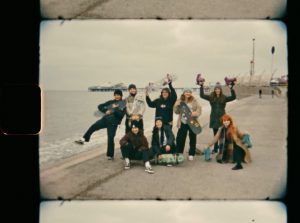
The collectives I’ve since worked with often have layered histories behind their names. For example, Slag Collective in Blackpool. They’re redefining derogatory terms like ‘skate park slags,’ flipping the power dynamic and turning oppressive language into something empowering. The whole premise of their name is a challenge to gender hierarchies because they'd been in spaces where they hadn't been welcomed or accepted or safe.
It speaks to this really DIY attitude and I think the skate scenes always had this. It's nice to see young women taking that on. How did you see that in the collectives that you were working with?
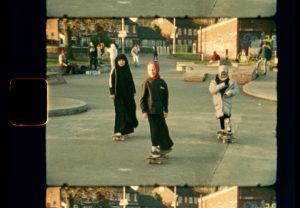
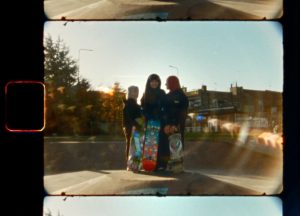
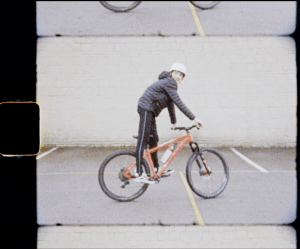
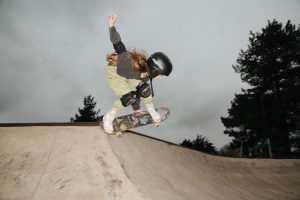
There's such a different approach to each collective and how they use space. The first collective that I met up with were repurposing a disused multi story car park. They use it because they didn't have any funding to rent an indoor space. So there they are on the top of a multi story car park in Barrow-in-Furness, and it was just a scene of joy. People supporting people who'd never skated, others who may be more familiar with it. Some of their friends, who are experienced skaters, built DIY ramps. One of the youngest skaters actually had a broken foot but was trying to do an ollie anyway!
Obviously it's the North West of England, the weather is never really on your side, but some groups have access to indoor spaces where equipment is provided.
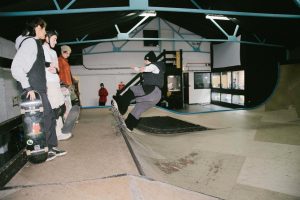
Empress Skateboarding in Preston have community nights in a skater-managed indoor park called Warehouse. You have somebody to support you, to coach you and help you if you've never done it before, like Big Woodys Girls only skate nights in Blackpool. Not only are they community inclusive, they are really safe spaces. Some of the other spaces are exclusively women and girls, which is important to have that option. There’s really creative interpretations of the spaces that are used and not only specific skate spaces.
There is a real sense of community building there, can you talk about some of the people you’ve met that have stuck with you?
The project came in two stages; I was researching a long time, shot the film and then I had another year of shooting stills because I kept meeting more and more skaters. Some of the younger skaters and their bravery and resilience has been really, really inspiring.
One of the skaters, Molly who’s 9 years old who’s featured in the zine, is fearless. Her Dad will take her to the park or skate nights and every now and then, she'll get his help just to work out a route, and then she puts him back, and then she's off. I've been with her at a skate park which has been completely dominated by young boys, and she's shredded up the bowl and it’s stopped them in their tracks.
I think the collectives who are organising skate nights are so inspiring because they're working full-time, and this is something they're doing on the side. They're making time and space for people and providing a third space. Often in the sessions, people aren't there to achieve anything. I've been there at the skate session, and a mum has come along and bought her two kids. What a lovely thing to do after school, you know, they're just there, they're skating and they're chatting and they're not at school, it's somewhere else, a different space entirely.
And then you've got the range of people who come. I've met a paramedic from Blackpool, who does this in her downtime; like perfect, of course, join a girl Skate Night and challenge yourself. Coming from a really challenging job, I thought that was wholly impressive. I think any one person I met, I learned something new from them all.
It’s come at a time when, with skateboarding at the Olympics and people like Sky Brown, there's actually been a lot of focus on young female skaters in the public consciousness. Do you think that's had an impact?
I met skaters who at the time that they started in the early 00’s, there was nobody really skating and they could name on one hand professional female skaters. They have come back and are now coaching like Realskate Northwest in Blackpool. Being with them at girls skate jams they can't believe how many skaters there are. It’s so positive, but so different from their experience, which was so numbered.
In terms of culture, skateboarding has always been really important as a subculture, but the professionalism that has been added to it, it's really important that women are included in that conversation. Sky Brown has definitely inspired some of the younger skaters that I've spoken to. It's really important to see yourself represented, to see somebody the same age as you or who's not too far away on the horizon age wise, because then you know you have something to look up to and a relatable role model. Supported by accessible, encouraging communities—whether that’s parents, guardians, or others at home. In some parts of the world skateboarding really brings people together. You think about Skate Pal, a self run community that is, at a time of such devastation, bringing people together and giving joy to people. I think skateboarding is an amazing example of empowerment, creativity, and learning.
"I feel like I'm an archivist, definitely. And a lot of my social documentary work is always thinking about how these images will outlive us all. So how can I best represent you, the person I'm photographing, and how do you want to be seen?"
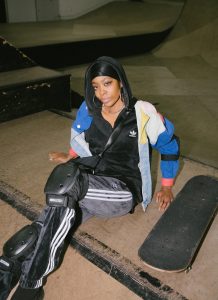
Thinking about the visual side of how you shot the work, looking at it from my head in an archive, I can really see the iconography of skateboarding. Were you inspired by that historic and archival record of skate?
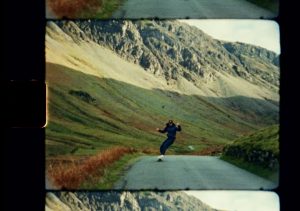
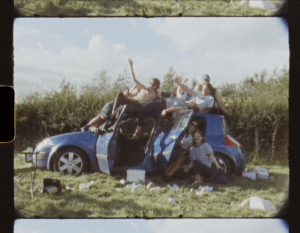
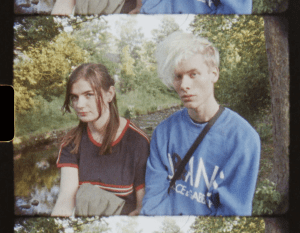
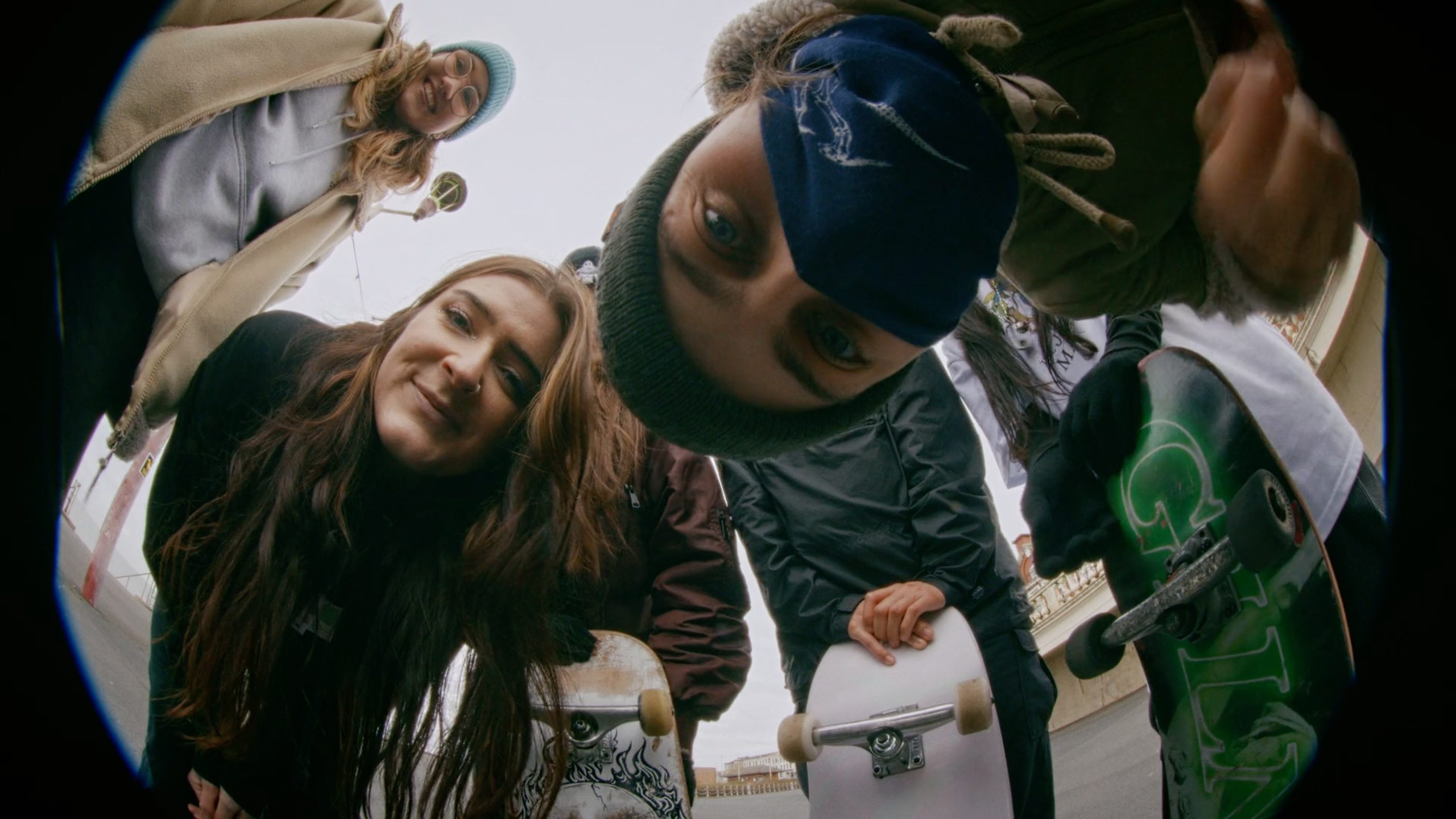
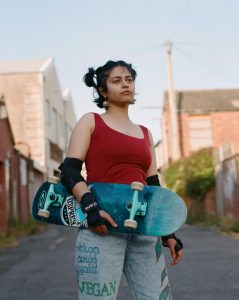
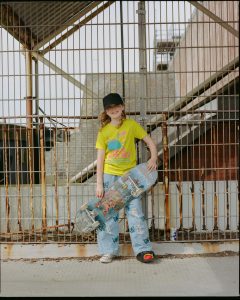
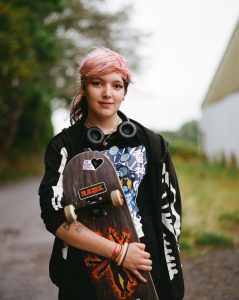
I feel like I'm an archivist, definitely. And a lot of my social documentary work is always thinking about how these images will outlive us all. So how can I best represent you, the person I'm photographing, and how do you want to be seen? How do we do this together? In terms of the outputs, I was really conscious that the profiling, documentation and representation of skateboarding historically has been male dominated. I was thinking tangibly about the media that has been used - zines, photographic film, VHS, Super-8, digital recordings and phone recordings. When I made the project, it was a conscious decision to use as many mediums as possible. I can never rewrite history but here I am documenting now, using those means, like a nod to the echoes of the skateboardings past. In addition to that I was taking formal, medium format portraits of the skaters, and I was also making cameras accessible for skaters to shoot with themselves, so that it was a cohesive, shared archive that is seemingly ongoing. I'm still shooting, maybe forever, but I really think about the outputs and where your work lives in the world.
I dived into some very early historical skate zines, which looking at them today would be interpreted differently. Most were male-authored and focused on public harassment—framing skating as a nuisance. But they didn’t touch on what I encountered throughout this project: conversations around harassment directed at women and marginalised genders. Interesting and enlightening, how culture has evolved and historically whose voices were being heard and whose experiences were overlooked.
As you say, those images will live on. That's what we try to say to people when we're building a museum and they ask why is it important? It's like, these things are in living memory right now. It means we know them when we talk about them, but in 50 or 100 years time, that isn't in living memory anymore. So what's been recorded and what's in an archive is what remains that's really important.
For me, making work with an archival approach began as a response to loss. My project Youth of the Rural North was formative in shaping everything that followed and how I approached Skate Like a Lass.
I created Youth of the Rural North after finishing my degree in Illustration. During that time, I lost my older brother and that was such a huge devastating loss that profoundly shaped me. Who I am, what I do—it all stems from that experience. Making work became a way of responding to loss.
That response took the form of documenting, archiving, preserving—image-making as a way to capture the present. I approach my projects with the intent to preserve something ‘forever.’ I want to ensure you’re seen, remembered. If this is the only chance to make a portrait—both formal and informal—then it has to count. I think about that all the time.
That also does apply to why so often I record youth, and the reality of youth, because going through something at such a pivotal and formative age, I've always got this lens to that fleeting moment of youth and preserving it. It looks different to everybody, but no matter where you are in the world and what your situation is, it's such an important chapter.
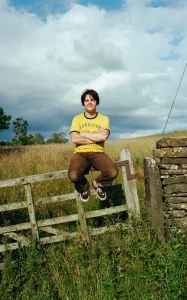
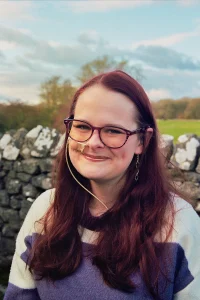
A lot of your work looks at the experiences of rural communities, and, as you say, young people within them. Why or how did you start documenting that rural perspective, especially in the North West?
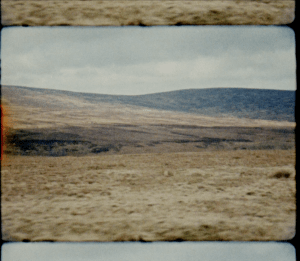
I've got deep family roots in the area. I grew up down South, but I had this Northern identity from my family. When my family relocated up North, I felt really familiar with the landscape and with the experience of rural life, but I hadn't lived it yet. When I moved back up here formally, I started to realise that living rurally is such a unique and overlooked experience that I felt needed to be documented.
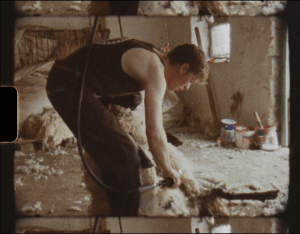
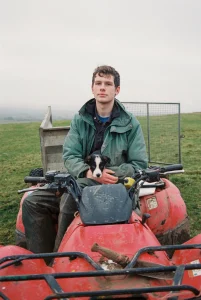
One of the portraits from Youth of the Rural North was a winner of the Portrait of Britain prize with the British Journal of Photography. That was an image of my friend William, a farmer. The image was shown throughout lockdown on screens across cities nationally. What was so interesting was there was William, who’s deeply rooted in the farming community, suddenly found his way of life reflected in the wider public experience people isolating, relying on neighbours, and operating on a smaller scale. That kind of rural isolation is often the norm for farmers, yet rarely acknowledged.
As a young person, his perspective also highlighted how rural voices can be overlooked, misunderstood, or misrepresented. Documenting rural life felt natural to me it was accessible, and it was my reality too.
If you think about the cultural perception of young people, it tends to be really urban centric, but it's rare you see representation of young lives of people who live rurally.
The North West is a big area, but with Skate Like a Lass I wanted to focus on my local, less populated communities—because they often have to work harder. There’s still so much happening: brilliant self-organisation and action making these groups possible. Bigger cities have the advantage of numbers, but it’s important not to overlook what’s happening just around the corner.
I will hopefully do this forever, and because of that I take it really seriously, and I care about the people that I document. I'm always conscious never to feel like you're taking something from someone and that you're really working together with somebody to make these images and to make this record. I'm really lucky that people have let me take their portraits, and that this archive will outlive us all.
Once I shared the images with the skaters, they began sharing them themselves. I handed out both 35mm and digital cameras at some of the skate jams. Sharing your craft is important—and for some of the skaters, it’s been genuinely empowering. It’s been a real pleasure to do this work.
I organised two local exhibitions—one in Blackpool at Aunty Social and another in Preston at SHOP. So many of the skaters came along; it was wonderful. Some recognised each other from the images, while others already knew each other. The feedback has been really positive. One person told me that sharing their love of skating in a safe space meant a lot to them. There’s something unique about female-led and inclusive communities —it really matters.
If you were to donate an object to the Museum of youth culture, what would that be and why?
You know, I’m not usually impulsive—but I’d say a 35mm point-and-shoot camera. Has everyone said that? The first time I used one, it felt like magic. So much of my childhood was documented on 35mm, and as a teenager, when I found an old 35mm and chose it over a digital pocket camera. Those images felt like they transcended time. I’ve brought those cameras into projects since, and I’ve seen others experience the same thing. And it just feels like something you can't even comprehend, like it's something intangible. There's something about the images that are made through that it feels like magic. So I would say, yeah, a 35mm point and shoot camera.
You can follow Juliet on Instagram here.
Buy a copy of Skate Like a Lass zine here and see the short film here.
Watch the short film Youth of the Rural North here