

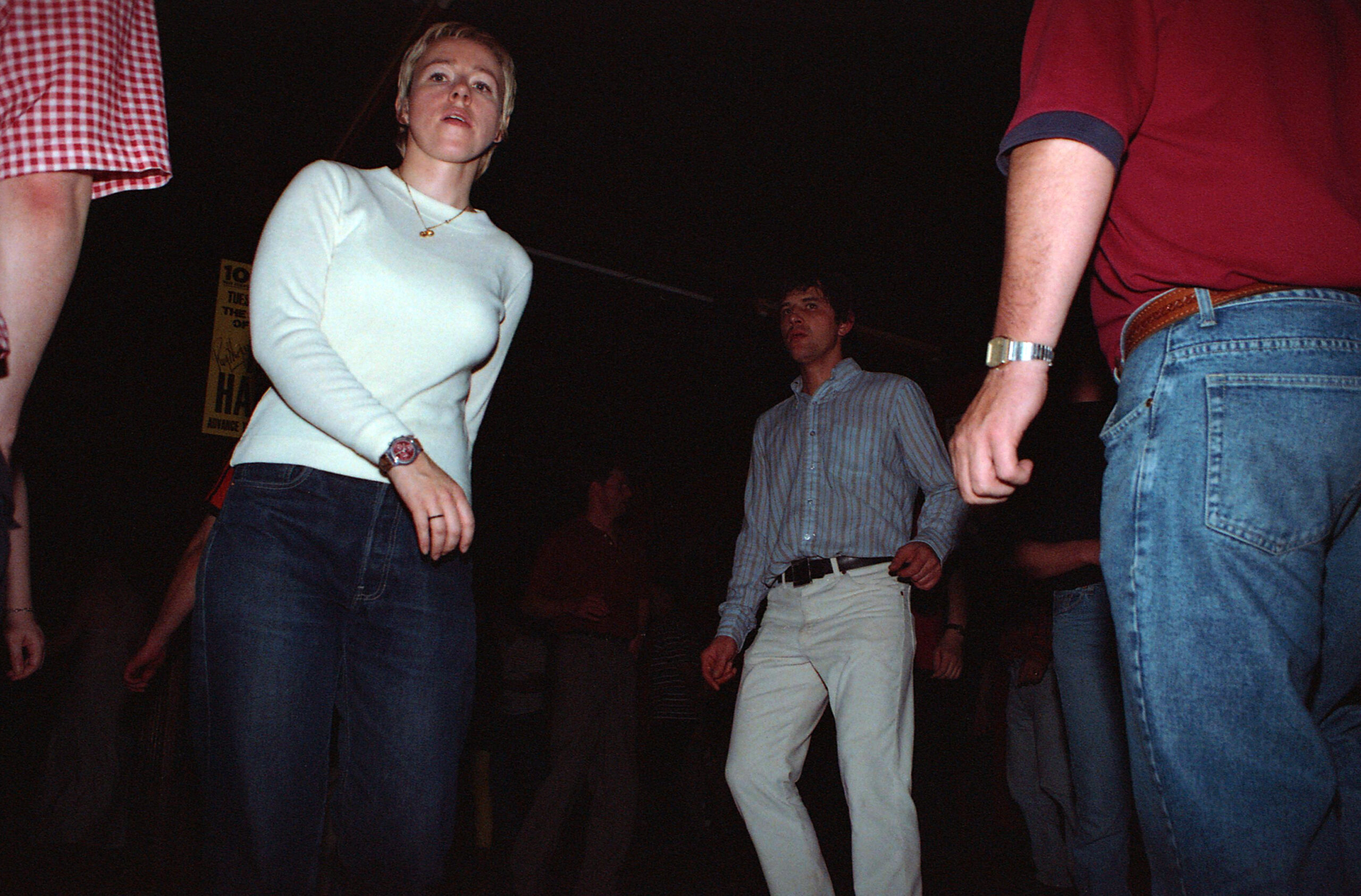
The Many Subcultures of the 100 Club
With Jeff Horton
The 100 Club has been a stop on the journey of almost every British subculture over the years since it opened. This has given Jeff Horton a close insight to the many patterns and shifts of youth culture in his time running the club. Jeff takes us through his own musical revelations growing up as well as what he's learnt about young bands and running an independent venue through the decades.
Interview by Esta Maffrett | 24.02.23
Do you want to start by introducing yourself and your relationship to the 100 Club?
My name is Jeff Horton and I own 100 Club at 100 Oxford Street. I’m the third generation of my family to have run the venue, my grandmother was a shareholder back in 1958 and then my dad had a record shop in Walkers Court and sold that in 1964 to partner with my nan and a third person. It was my dad that named it the 100 Club. Previously the venue would always have the word jazz in the title and my dad wanted to have a more open music policy. He ended up getting residence in the first six months from The Kinks, The Stones and The Who back when they were called The High Numbers. I started working for my dad in 1984 after working for British Aerospace making aircrafts when they shut the whole factory down. My dad brought me back to work at the club, it was always something I thought I’d do because I’d grown up with it, It just seemed like a natural thing to do really. I will have been there 40 years next year. My daughter Ruby now works with me in a fairly open role of venue manager and part promoter and she’s doing an amazing job. It’s in her blood definitely.
Was music a big part of your life before you worked at the 100 Club?
I was always a massive music fan. My dad used to bring me home records from Radio London shows, a lot of white labels and seven inches that were given to DJs. There was a lot more waiting for music to come out. That’s the thing I really miss about the past is the anticipation of an album release. Suddenly there was rumour that David Bowie was bringing out a record that was like nothing you’ve ever heard before and it’s scheduled to be released the following year. You get little snippets of information and by the time the release comes you’re so excited. I spent time growing up in Dorset and it would take me an hour to get to the record shop and when I got there they’d run out so you have to wait another six weeks for the new pressings to come out. But when you’ve got your hands on that piece of vinyl you spend the bus trip home going over all the sleeve notes and the lyrics and everything else. Then when you got to play it, it was an amazing moment.
I don’t miss the racism and the violence. Going to football and gigs could get really nasty. I used to say to Terry Hall that I remember going to see The Specials around 1980 and I remember all the vans coming down from Coventry with the sole purpose to beat up the locals wherever The Specials were playing. I was heartbroken when Punk ended, I didn’t know what to do. Somebody said to me why don’t you come down to see this band The Specials play in Bournemouth and I went down and it was amazing. I thought life is gonna carry on. To see a band with people from different backgrounds was unbelievable. The level of intensity and impact those guys had in that band was something else. I’d be watching and suddenly a ceramic ashtray would fly past my ear and I’d have to keep watching because it was amazing but I have to also have eyes in the back of my head because I want to get out of here alive. It was the same at football matches, I wouldn’t want all of that to come back. Although it was dangerous it taught you a lot, you could sense danger at the drop or a pin and you knew where to avoid. Now I think everything is so sanitised that people aren’t taught danger signs. It’s the government, the powers that be, that want it like that but I don’t think it’s doing anyone any favours.
"The level of intensity and impact those guys had in that band was something else. I’d be watching and suddenly a ceramic ashtray would fly past my ear and I’d have to keep watching because it was amazing but I have to also have eyes in the back of my head because I want to get out of here alive."
Why do you think the 100 Club has such a history of bringing in the subculture of the moment?
I think it’s something that started with my dad. I’ve already mentioned that he named the 100 Club after its location and he specifically wanted to take the word jazz out of the title because he understood that if you’re going to survive as a venue you have to be open to all kinds of music. Of course that then brings in all kinds of culture and subcultures. My dad kept scrapbooks over the years with all the bands, features and reviews of shows in there. I've kept them and it’s just enormous, absolutely enormous how far it reaches. So I’ve got to give credit to my dad, it started with him. It’s the only club that I can think of that has been there for over 40 years and kept such an open policy. You have Jazz clubs, you have Blues clubs, Mod clubs, Punk clubs, Northern Soul clubs, Reggae clubs. Very few clubs are just music clubs. I think that’s where the rich heritage has come from and when you come here and see the photographs on the walls of the history it really tells you what you need to know.
Julian Bahula who was a really good friend of mine used to run the African nights in the 100 Club back in the eighties. We had all the really important African musicians play, for example Fela Kuti, Hugh, Master Kaler and more. He went back to South Africa when Mandela was released and later became president. A lot of musicians moved back as they became free from persecution. Julian would often call me to see how I was and how the club was and he would say ‘you must tell your father he has to come to South Africa. When he comes over there will be thousands of people at the airport’. It gives you an idea when you hear those conversations the impact that giving space to this music had on people. It’s a really deep impact and one that lasts forever.
Do you think the success comes from the open door policy or is it a more active effort to schedule all genres and scenes of music?
I think so and because we’ve continued to do that to this day. My dad started a blueprint and I’ve followed it religiously because to me it’s how I want to live my life. I’m not interested in hanging out with a load of white middle class people that are as dull as dishwater. People say the world is a melting pot. I live in London because I want to live with the variance that London has. It is changing, when I moved to where I live there were so many people from different backgrounds and subcultures, now it’s very white and middle class but over time I've had neighbours from all over the world.
The Clash are probably my favourite band ever and part of that is what they represent. During the 1970s Punk was growing up with a background of race riots, instead of having support bands Joe Strummer had Mikey Dread and Don Letts come to DJ. Paul Weller did the same thing with The Jam when he got Northern Soul all nighters to DJ at The Jam gigs. So what Joe and Paul were doing was trying to bring young black kids into an environment they wouldn’t normally come in which at the time was a really dangerous thing to do. The National Front was huge. I've witnessed the club call the police because there were people from these groups on the African nights threatening people with violence. Talking about it now feels like it must have been a distant time but it was only really 35 years ago.
How have you experienced nightlife changing post lockdown?
In my industry now there are more and more complaints from people about ‘noise’. Firstly my attitude is that it’s not noise it’s music. Music is great, although we might not all like the same thing but there are parts of music that we can enjoy across the spectrum. We’re in a situation now where the high street has fallen off a cliff, there are loads and loads of empty shop units, walking along oxford street now is like the Bronx in 1977 because everything is locked down, graffitied over and run down. It’s not a bad look for central when it’s been so corporate for the last 20 years. But more space is being given to people to come and live on Oxford Street which is just unheard of. And that is going to cause more problems with cutting back hospitality which has had enough problems as is. Once these people get their feet under the table they’re going to be moaning about people standing outside pubs and the children with their friends in the summertime, the sound of crockery and cutlery as people eat, people laughing. There’s no better sound than hearing people, especially in the middle of London having a laugh, isn’t that what life is all about?
As well as iconic bands you also make it a priority to promote new and younger music. What’s the importance of this to you?
One thing you can never do is stand still. I did an interview for Fred Perry about 15 years back and one of the questions they asked me was ‘how do you feel about what you’ve achieved at the 100 Club?’ I said the moment you start looking back is the moment you’re finished. I’m 62 and I don’t spend one second thinking about stuff we’ve done in the past, there will be a time for that one day hopefully on a beach in St. Lucia but now is not the time to do it. It’s the same with music. If you’re looking back on your Punk heritage or your Blues heritage or whatever then you miss out on Hip-Hop and Grime, all the other stuff that’s coming through. You have to keep being progressive, I still book bands from 40 years ago but I also bring other stuff into the mix because it’s important. Recently we have seen a proliferation of cover bands and i’ve had to say no I don’t want to keep filing our nights with this. It’s at odds with what we’re about, we’ve always developed stuff and tried to find new bands and cultures. So yes I'm very aware of how important it is to give people a bit of a break if they have the talent.
Do you find that young people are still as interested in live music as they ever were or is it less relevant in the way music is consumed today?
It’s very hard to say with the younger musicians, but I think younger people are still interested. I’ve found there are a lot of middle class kids in bands. I was having a chat with Bobby Gillespie from Primal Scream who I know really well and is a big fan of the club. He made a very interesting point that the backgrounds of these new bands coming up are completely different. They’re all middle class. He said when he was growing up the bands that were forming all came from nothing and when you have nothing, you come from hardship, you witness things and you’ve experienced things and a lot of these people don’t have it. I think that is a very valid point. I think now there’s a lot of middle class kids in bands and I can’t think of many that come from tough working class backgrounds. Because of this I don’t think today's bands have the work ethic and are the people who go out on a limb to do what they want to do.
We still get a very young audience and there are still a lot of young people who want to go to gigs and have a good time, want to stage dive and all that, there is still an element of that. One of the things I do notice with younger audiences is that they just don’t drink anymore. I suppose from a health point the NHS should be very happy about that. We’ve noticed it because the bar has always been 80% of our income. We’ve adjusted to bringing in non alcoholic beers and spirits but it’s been an issue for us. Years ago, even 15 years ago, if you put a band on the spend per person would be around £15, now it’s down to about maybe £5. This hasn’t just coincided with the cost of living crisis, it’s something that I was noticing before COVID. There’s definitely a shift in people's thinking when they go out on how they’re spending their time and money. We have a zero tolerance for this at the club but it seems to me that while drinking culture is starting to disappear the drug culture seems to be getting bigger, even bigger than ever.