Black Cultural Archives with Harlynn Homan
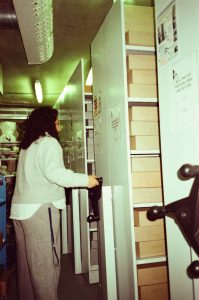
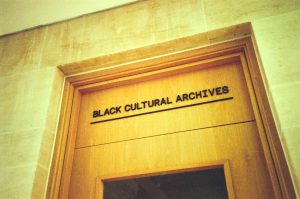
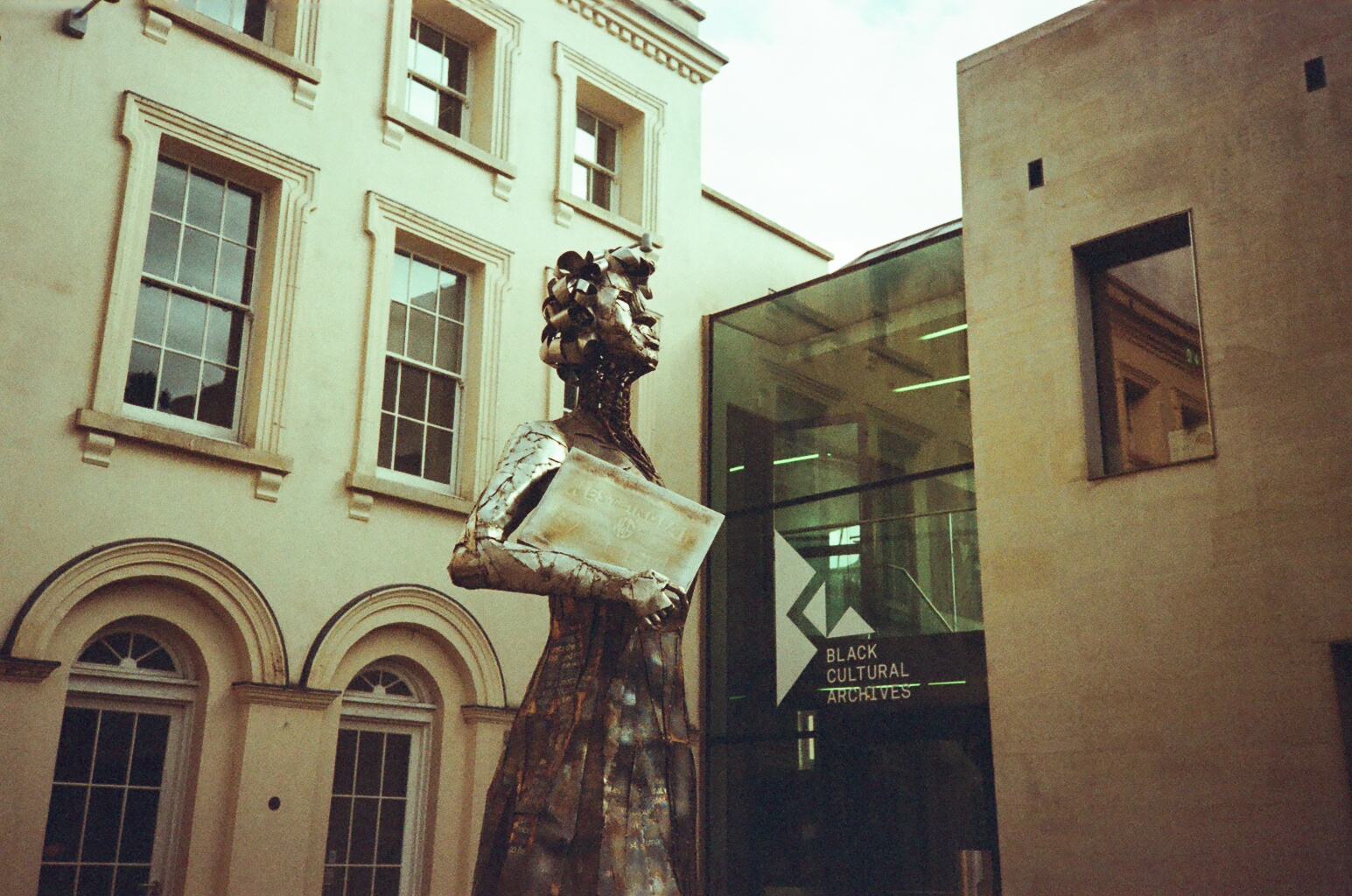
Set up in the eighties as a space where Black Britons could find positive representations in the face of racism, the Black Cultural Archives has emerged as the main organisation in the UK collecting and documenting Black British history. Harlynn Homan is the Archives Manager and custodian of the collection. For the latest An Archivist's Diary, Yeliz headed down to see the collections and chat with Harlynn about her approach to archiving.
By Yeliz Zaifoglu | 29.10.25
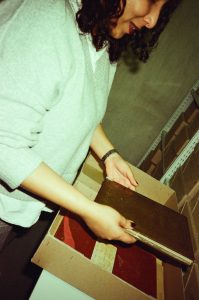
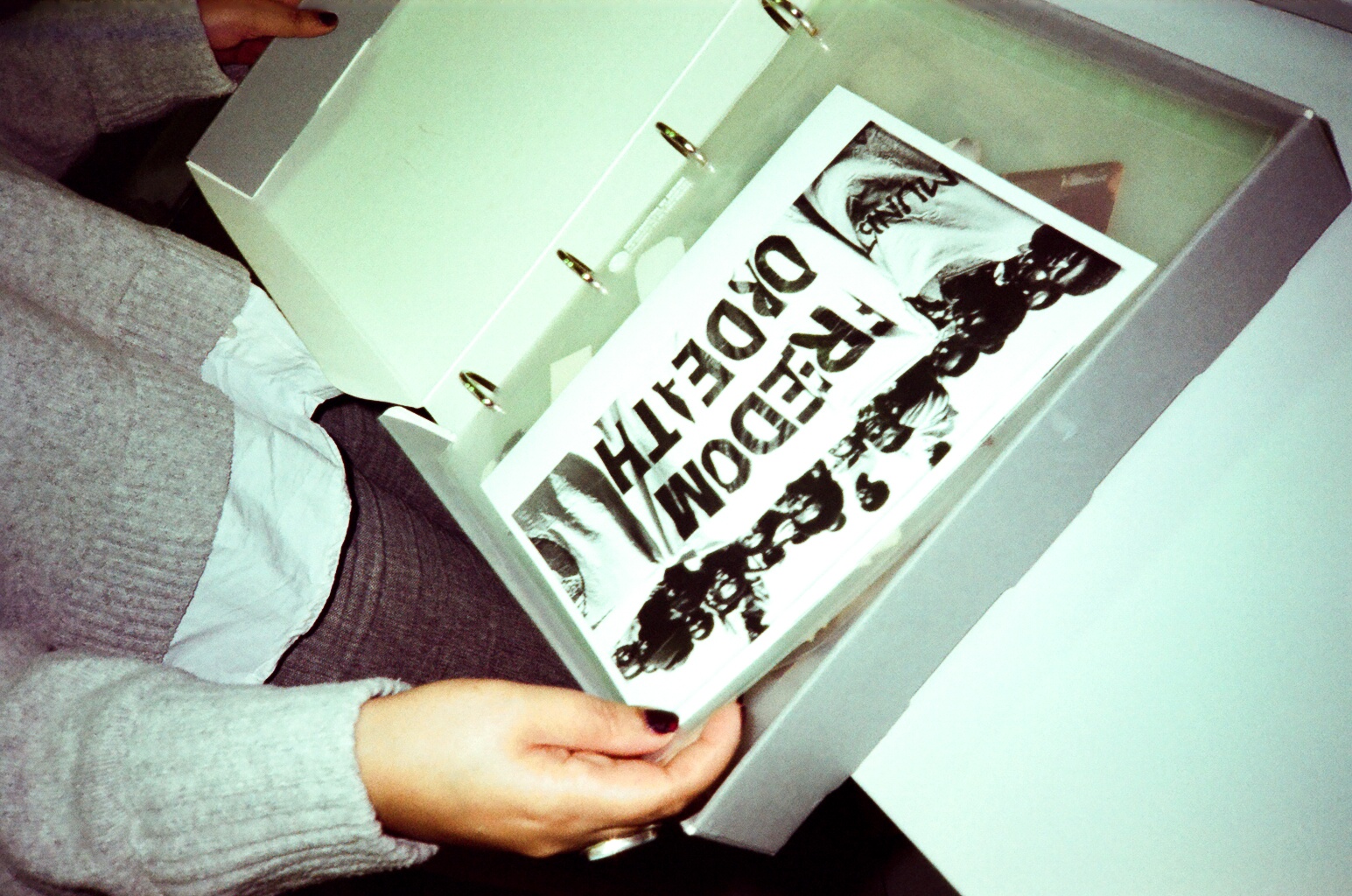
The Black Cultural Archives has always been a place I admire! It was one of the first places I explored when I was introduced to archiving in 2022/23. In fact, it was the first time I witnessed the glory of paper envelopes and Tyvek ties in full force! To return two years later as a more rounded archivist and have the chance to pick the brain of Archives Manager Harlynn Homan was truly a full-circle moment.
Chatting with Harlynn was eye-opening. Gaining insight into the differences in archival practices across global institutions felt almost validating. Perhaps because it’s reassuring to know that there are versions of this career that aren’t bound by such rigid, prescriptive rules, especially when dealing with something as fluid as culture.
Strong, motivated, and ambitious women never cease to amaze me, but the highlight of my conversation with Harlynn was her unwavering dedication to community. Hearing her speak with such vigour and vitality about the importance of archives for communities that deserve to have every side of their history not only acknowledged but preserved struck such a cord with me. It’s painfully clear how political archiving really is: whether it’s used as a tool for decolonisation, correcting historical narratives, or even creating new ones, the archive—and those who serve it—are truly makers of movements.
All right, so who are you and what is your role at the Black Cultural Archives?
Hello! I'm Harlynn Homan, and I'm the Archives Manager at BCA. It's been almost a year and a half now. Oh, wow. Time's gone by really fast. I joined in December of 2023 but that was just like 6 days that month. And then Jan 2024 onwards, 4 days a week is when I became full time completely. But I've been kind of in the back end shadows, figuring out the archive space before I made myself more publicly known in the space.
What was your history coming to be here then? Like, previously, what kind of spaces did you find yourself in like almost your archiving journey!
So I moved into archives when I was 18, when I was doing my undergrad back in India, and I wanted to figure out what I wanted to do. I knew I was really good at History and Sociology, but I wasn't sure where I wanted to be, so I interned at a pharmaceutical archive over two summers, and realised I was very good at it. The team said, you know, you got to pick this up. I then moved into galleries, archives, and worked with different heritage professionals in Mumbai. Realised between museums, galleries and archives, archives was the place that I wanted to be!
When I graduated a month later, I joined an organisation called the Citizens Archive of India, which records the oral histories of the only generation alive to see India gain independence and then develop as a country. The age group was between 74 to 104 and so I ran that digital oral history archive for four-five years. We have got about 400 recordings over there. And as a community, again, something that started bottom up, a brainchild of one individual, no funding, figuring things out, being something quite unique in the country, and I reached a point where I've done enough research online, I've absorbed as much information as I can, and met all the individuals back home, but I wanted more, and that's when I decided to do my masters in archives and records management. So I came to UCL. I did that.
I was very clear that whichever place I moved into after UCL, I wanted it to be a place that I could do projects on my own, and archive in my own style. I did not want to sit by some kind of guidebook. And I kind of felt BCA was one of the few places that kept popping up on my radar. I saw an opening, I applied, and I got the job, and now we're here a year and a half later! So it's just been a roller coaster of just jumping from one space to another as fast and as best as I could.
Have you spotted any big differences between archival work in India vs the UK?
Huge differences! So there seems to be in India, a lot more collaborative work from the ground up, but also none of us followed very strict institutional archive restrictive rules. So we'll follow the ISAD(G) guidelines, and we'll have ethics and all, but it's more personal. So you had a lot more personal relationships with your donors. It was more one on one and there was time to do everything thoroughly. Here, I kind of feel you're fighting against time. There's a lack of that personal relationship, even with your donors, there's too much stress. There's also a lot of historical kind of events that play into your roles, that creates burden. So it's very different how back home I felt there was like a sense of community and welcoming, yet over here, everyone's racing against time to be the best in the archival space in London. That kind of like takes away the whole ease of actually building slowly and being reflective.
So how do you think working here has influenced your own personal way of archiving, or thinking about archiving like just strictly in this institution?
It does. It has an impact. In the sense, the way I archive and the way I work within the archive still exists, but what I do feel the change. I do understand the sense of urgency with such histories on how we need to be a lot more actively responsive and fast in trying to get it recorded, documented and spoken about out loud! I never saw myself using an archive to move into more activist and political spaces. I was always happy to support that. But now, I think one thing BCA did give me is confidence.
If you understand the collection and what BCA stands for, to make moves into like parliament, or move into bigger meetings and actually state, on behalf of all of us, why a space like this exists and the impact we have is so important. So I didn't think I had that in me before, but that's something I think people and this space has actually given me. I know its relevant history, but as an archivist, you don't necessarily take the lead at a table and say it. And now I kind of feel like it's become like a quick response, where if I see someone saying something wrong, I don't hesitate to call it. Yeah. So it's an interesting change for myself as well. Even sometimes I have to ask the staff “was that too much!?”
Were you like that outside of work?
Like, in my personal life? Yes, I'm very zero nonsense policy. But professionally, you kind of, like, tone that down a bit. But over here, I kind of feel like people like that??
I'll be honest, I have a small social battery, yes, so that's one of the reasons why I loved working in an archive. You could just lock yourself in the digitisation suite or the repository. Now that does not exist unless I'm working from home, or even then I've got, like, my phone blowing up or my team's email, but I kind of feel it's because as women, we are always asserting our presence in different spaces, whether it's personal, family or even just on the street, we’re a lot more emotional, vocal, and equipped for these professional spaces.
It's funny how archivists are also very protective of their collections. And it's not like a maternal angle, but I also do feel like just working in archives, and I can say this for my team as well. We're so protective of the collections, like we really want them to be appreciated in the right manner, handled in the right manner, spoken about in the right manner, and so there's always that level of high care that comes from us. It's very emotional. But also the people we're working with, because it's not just the material, our donors, also kind of evoke those emotions within us. So it's a very emotional job. I feel, and I think as a woman, you're a lot more in tuned to respond to an emotional job like this. You're a lot better at it. And we're also a team of mainly women over here so it's nice.
Okay so a broad question. But why do you think archiving is important?
It is extremely important because there are different types of archives. Different types of archives have ranges of records of the same event, and you need those different voices, it’s evidence, it’s records, it’s memory.
Archives are institutions that are records of what life was like and can be, evidently, and it can be used as a massive weapon to write history the way it should. So we are in the process of rewriting history. We're decolonizing a lot of stuff that was written, but we're also now using this very same material to kind of fight the very right political changes that are happening today. So this evidence is needed. These voices are needed. Activists are so used to saying things, and if that's not recorded in spaces like archives, it can be lost.
I kind of feel like, every time you have something that comes into the archive, someone else knows about it, some other has worked with it, and it kind of creates a web that's then creating collective memory. That will then impact the way policies are written, the way research is done, the way textbooks are written, the way people speak about history, the way people actually heal themselves or the community remembers events. It can have a trickle effect, or sometimes it can have a wave effect. So we need these spaces. We're also creating a safer environment for people to come and look at this kind of information, which can evoke a lot of emotions - what other space is going to give you this kind of care? So we're not just about cataloging stuff, we're also kind of supporting people and helping people looking at our materials. So there's a lot of work that archives can actually have an impact on and people in different ways. It's very important that these spaces exist and continue to exist.
Is there something in the collections that stand out to you?
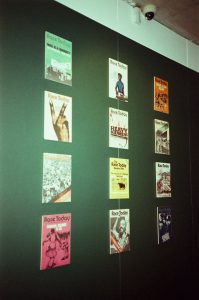
Because I haven't gone through the whole collection just yet I cant give you an answer to that, but what I will say is the language really stands out to me. It's not a specific collection, it's not a specific item, but it's the language that I see through multiple items that I really like. It's very strong. It's very assertive, and I love materials like that. It's just like, in five-six lines on a pamphlet that will tell you everything and it's very educational as well. So it's also not like a boring report. It's colourful. It's got sketches, it's got emotions to it. It's got multiple languages. So I kind of feel like that raw root, but also like the kind of confidence that you see through this, and especially if you know the donor, it just makes the picture click in your head!
The Organisation of Women of Asian and African Descent (OWAAD) collection, for example. They were/are a collective of women who fought against racism and created educational resources, created medical centres and more. They're still working, creating awareness, creating impact. And you see that through the material, and it's kind of like it just clicks for you. So it's very inspiring that way to see. I think I question myself sometimes like will I be able to sustain what I want to do now into my 30s, into my 40s? Will it fizzle out? Will I be distracted by life? When you meet individuals like this, you can see that pattern that life happens. And sometimes there's drops and highs, but if you really believe in something, you're gonna see it through till the very end. And that's very inspiring. In BCA most of our collections kind of give you that kind of inspiration.