

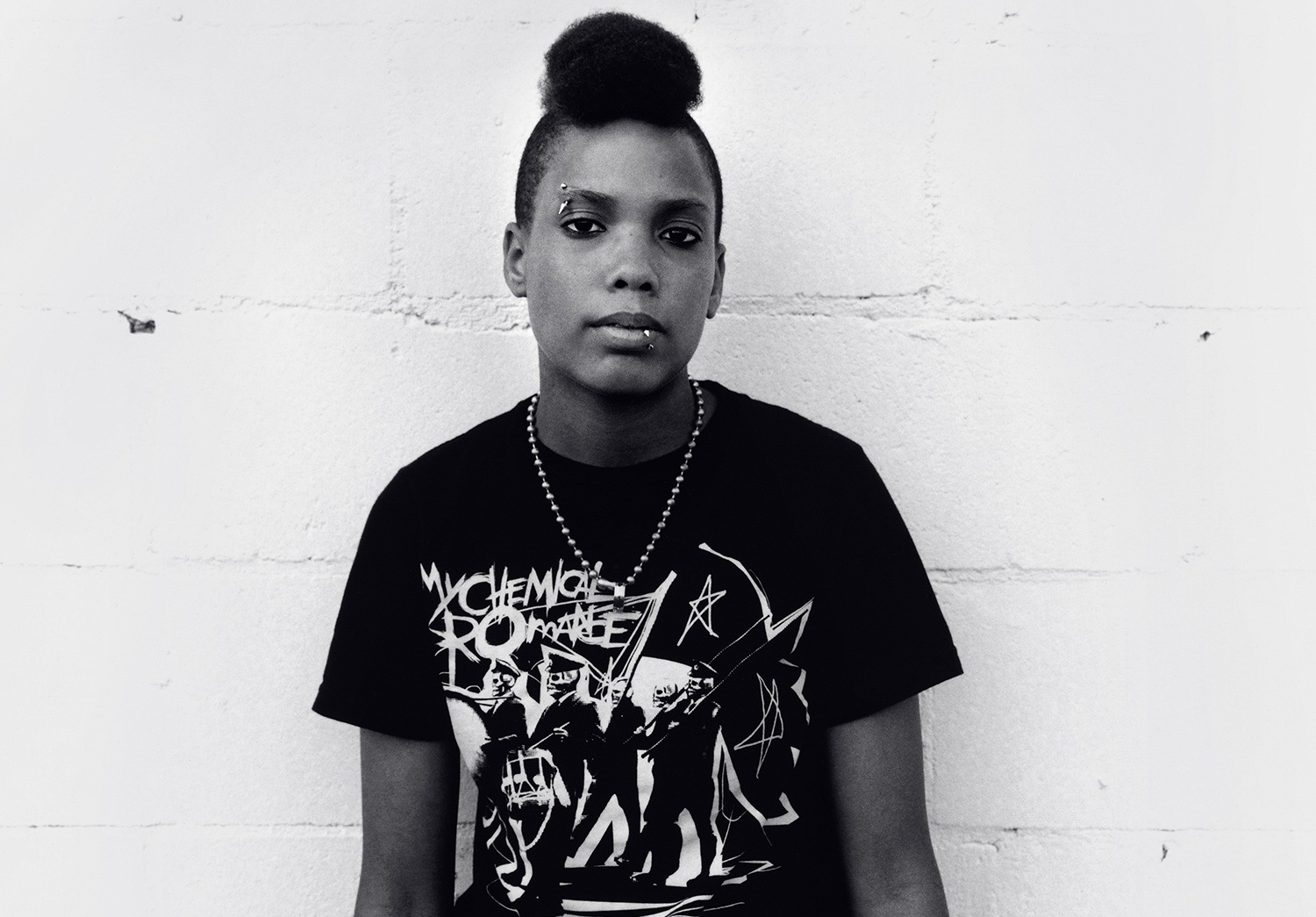
Fans and Feelings in Emo and Post-Hardcore
Essay by Francesca Sobande | Cover Photo by Andreas Laszlo Konrath | 08.10.2025
Sexism, misogyny, homophobia, transphobia, and other inequalities are pervasive. This impacts music scenes and subcultures, including emo. However, there have been some significant societal changes in the decades since the book, Everybody Hurts: An Essential Guide to Emo Culture, opened by stating: “For the guys who wear eyeliner – and the girls who love them”. That line from 2007 mirrors how emo has often been dualistically framed as fronted by men who are admired but majorly supported by girls and women who are sometimes dismissed as “fangirls”. Archived music writing on emo hints at this too.
For instance, in a Held Like Sound zine review of Dashboard Confessional’s 2000 album “The Swiss Army Romance”, Brian Peppler wrote: “Note to self: if you want to appeal to the female persuasion, try the sensitive approach. You’re required reading will be ‘Chicken Soup for the Soul’ and Christopher Ender Carrabba’s Dashboard Confessional CD. In addition, pose in photo shoots looking oh, so lonely, and depressed.”
As scholar and journalist Jenessa Williams writes in a research article on “Screaming, Crying, Writing Up: Literary Music Journalism Books as a Legitimization of Contemporary Fangirl Practices”, “fangirls are attempting notable reclamation of the term, fighting back against misconceptions of their superficial engagement with popular culture”.
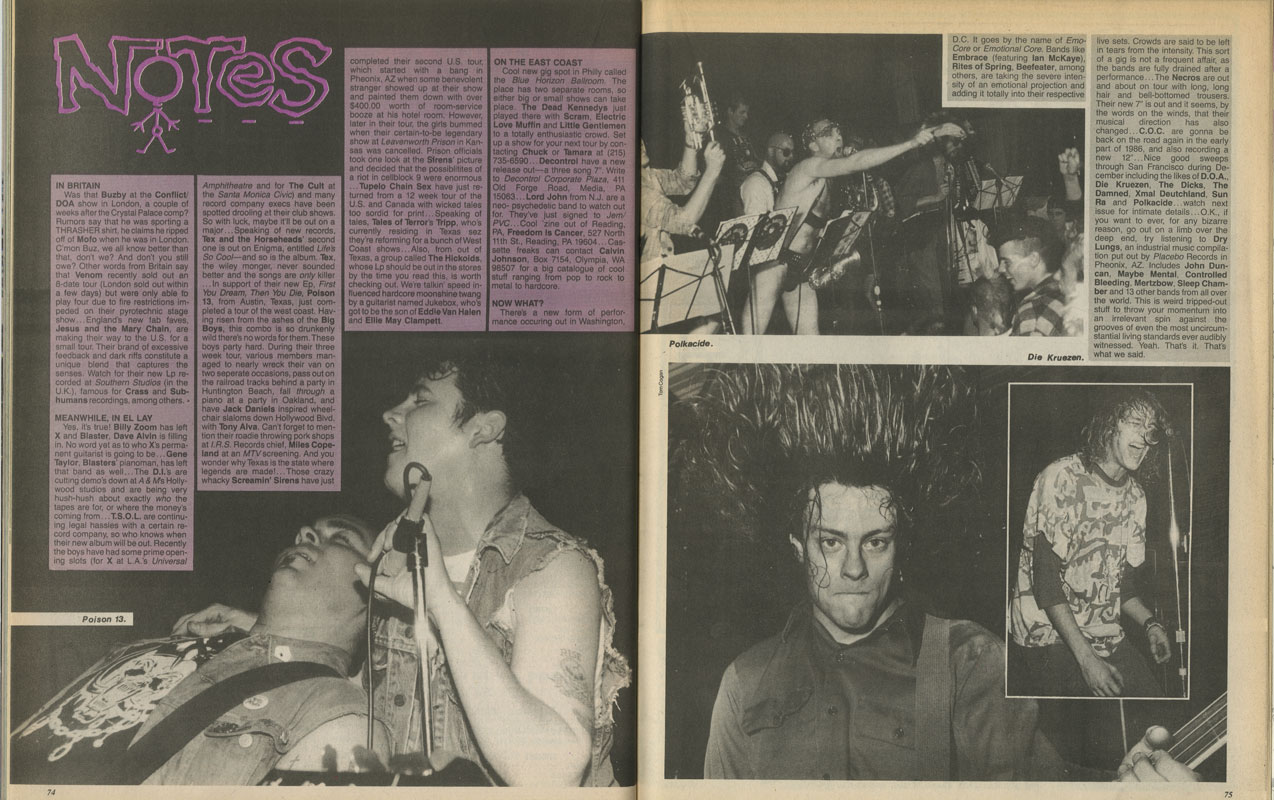
(Not) Everyone Loves a Tryer? </3
As addressed in Hannah Ewens’ book, Fangirls: Scenes from Modern Music Culture, “marginalized fan groups are never given appropriate credit”. Inequalities impact who is most likely to not just be labelled “cringe” or “uncool” but to truly be treated as an oppressed outsider whose emotions and experiences are disregarded.
Frequently, “cringe” is used to suggest that someone or something is embarrassingly excessive (e.g., “too much” / “do less” / “trying too hard”) or inadequate (e.g., “not enough”/ “do more” / “try harder”). “Cringe” is uttered in ways that involve assorted intentions and impacts, such as comical sentiments between friends or scrutinising asides about strangers who are written off as “irrelevant” and “dated” (aka “old”). Some people may be mortified at the idea of being viewed as “cringe”, whereas others may think of the label as nothing but flippant, funny, and ironically, a bit “cringe”.
Like many genres, emo involves a mixture of silliness and sincerity, as expressed by earnest deep-dive articles about it and that sometimes (un)comfortably sit alongside contrastingly playful memes that poke fun at emo and associated aesthetics (e.g., memes of NBA basketball player Jimmy Butler after his “emo” appearance at a press junket). On the topic of online responses to Butler’s emo-ness, Jenessa Williams and I wrote:
For decades, emo has been vulnerable to trend based co-option and corporate attempts to cash in on ‘subcultural capital’. However, as is indicated by Butler’s foregrounding as ‘Heat Wentz’ in the ‘So Much (For) Stardust’ video [by Fall Out Boy], emo also taps into the coolness associated with elsewhere, such as that of ‘the televisual politics’ of Black sports figures. While further research needs to be done surrounding waves of emo and their mainstream commodification in the 2020s, the response to Butler’s seemingly sincere engagement with the genre opened up valuable conversations about the importance of diverse representation in emo, and wider acknowledgement of Black fans who care about both ‘jock’ sports and more introverted forms of musical/stylistic expression.
Our work together continues to look at the relationship between emo, race, and gender, while recognising that emo is far from being the only genre of music that involves creative expressions of emotional vulnerability. For example, many of the songs of PinkPantheress can be thought of as expressing some of such sentiments. These include “Where You Are” (2022) (produced by PinkPantheress, Mura Masa, and Skrillex) which features WILLOW, samples Paramore’s “Never Let This Go” (2005), and breezily blends inflections of emo / pop-punk with (bedroom) pop, garage beats, and a feel of whimsy amid feelings of angst.
The music of Black people is emotionally striking – whether it’s the Alt R&B and wide-ranging work of Frank Ocean or the legacy of Ronnie Spector whose unmistakable vocals are part of the commanding vulnerability of “Be My Baby” (1973) by The Ronettes (which she co-founded). In the words of Kele Okereke (of indie band Bloc Party), “[t]enderness is important”.

L: Skunk Anansie, R: Cringe Fest, by Francesca Sobande
Dear Diary, My (Teenage) Angst Has a MySpace Account
Long gone are the early days of blogging sites such as LiveJournal, the newness of MySpace, and a time when predominantly text-based online forums were the mainstay of social media. Now, digital experiences involve an emphasis on being “seen”, but not too much and not for too long (e.g., social media functions that aid seemingly short-lived content, such as Instagram stories). As Liz Pelly notes in critical writing and research on the online streaming service Spotify, making and listening to music today is often stymied by a capitalist system where “art is conflated with content”.
Musicians are increasingly expected to be content creators, and in some cases, first and foremost. With Anamik Saha and David Hesmondhalgh, I’ve looked at this and racism’s role in types of online (in)visibility, as part of research on “Black, Brown and Asian cultural workers, creativity and activism: The ambivalence of digital self-branding practices”. While musicians can face troubling pressures to create and share social media content, sometimes using such platforms is helpful to their work and experiences of creative self-expression. But that may still involve them needing to navigate many challenges.
To once more revisit the words of Jenessa Williams, “[i]n the age of social media and self-conscious online self-representation”, many people may be concerned about how they are perceived – both online and offline.
It can sometimes be easy to laugh off how ideas about “cringe” circulate online, but the ways that people experience anxiety, including, but not limited to, the fear of how they are perceived by other people, can distinctly detrimentally impact them. Addressing such matters and much more, Cardiff based Heads Above The Waves, “a not-for profit”, do work “that raises awareness of depression and self-harm in young people”, and awareness of experiences of panic attacks and anxiety.
In the world of music, in March 2025, rapper and songwriter Doechii released “Anxiety” – a song originally self-released in 2019. It was rereleased due to support vocalised online, and although it resulted in some mixed responses, the song sparked discussions about anxiety.
Aptly titled, the song takes on themes related to anxiety and associated feelings, such as being overwhelmed by acutely intense pressures and expectations of you, while dealing with debilitating forms of self-scrutiny. Sampling “Somebody That I Used to Know” (2011) by Gotye, Anxiety (2025) might be thought of as conjuring some of the sentiments of that previous song. This includes a mix of moods that can be described as contemplative and melancholic yet bolstering in their melodic and direct expression of difficult feelings of being perceived and pressured by others.
Additionally, “Anxiety” (2025) tackles toxic elements of the music and media industry, where the words “quiet on set” may take on different meanings contoured by structural silences, such as silences about abuse, harm, and cultures of constant overwork.
With lyrics that acknowledge the torment of how anxiety creeps into daily life, “Anxiety” (2025) is one of several high-profile songs on this topic by Black women in recent years. Among these is a 2022 song of the same name by Megan Thee Stallion. This has led to people making parallels between the two songs, while also affirming the individuality of each, and their potentially collective impact by centering Black women’s anxieties.
As Emma-Lee Amponsah and I wrote on the subject of “demands, displays, and dreams of ‘Black joy’”, and when drawing on the work of Samara Linton and Rianna Walcott on The Colour of Madness: “the concerns, angst, emotions, and mental health and well-being of Black people are often stigmatised, if not outright pathologised and policed”. When acknowledging this and that Black people’s experiences are rarely foregrounded in societal conversations about anxiety, it is significant that both Doechii and Megan Thee Stallion have directly addressed that topic through their creative work. Such songs and others are also testament to how the open expression of emotional vulnerability – sometimes also referred to using the shorthand “emo”, even if it departs from the genre itself – is far from being solely reserved to the content of what is deemed part of “emo” music.
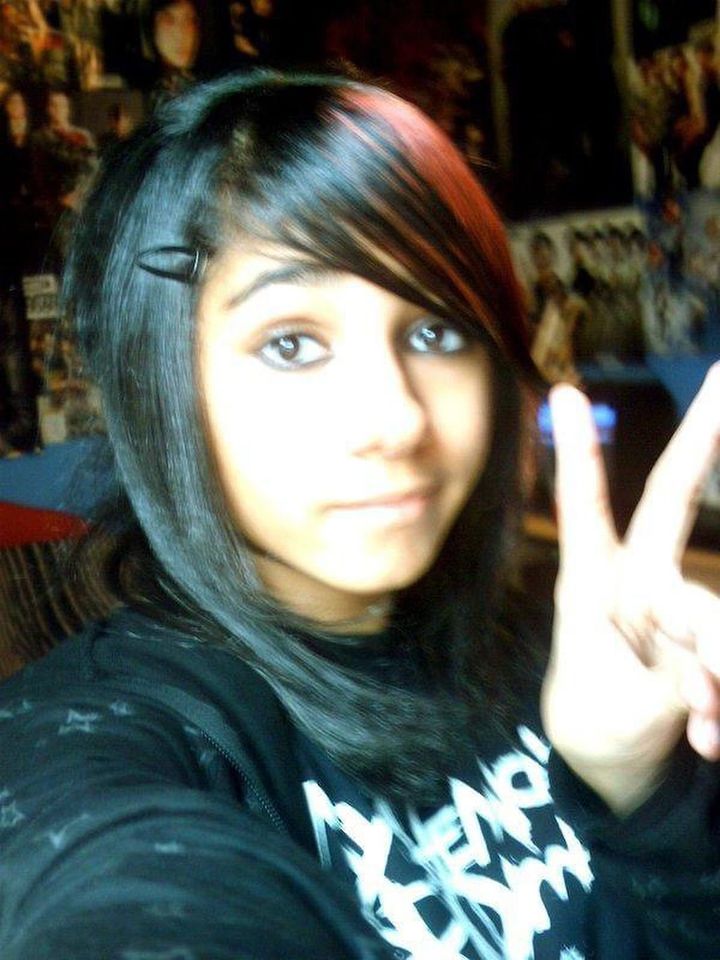
“We were there as well”: Experiencing Emo and Post-Hardcore (Then and Now)
Angie Larrier, who contributed to the Museum of Youth Culture’s exhibition “I’m Not Okay: An Emo Retrospective”, generously agreed to speak with me for this project. Our discussion touched on the past, present, and future of emo.
In Angie’s words about emo in the early 2000s, “that time…we were there as well”. During our conversation Angie reflected on Black people’s experiences of emo, punk, and “alt-ness”, then and now: “I notice that on social media [now], say on TikTok, I still see the same racist comments [from back then] towards kids, saying ‘Black people can’t be goth, can’t be emo’…the same things are reiterated…”.
Expanding on the different ways that Black people in “alt” music spaces are perceived, including pressures to (not) look a certain way, Angie said:
…when I was 12/13…I watched Afro Punk (2003) the documentary and that completely changed my perspective…one scene that sticks in my mind is there was a lady showing a book …a photography book of African people and they had stretched ears and tattoos and she was saying “I’m just doing what actually comes naturally to me [when having a look like that]”.
Writing about the origins of Afro Punk in the Editors’ Notes of the book, Black Punk Now: Fiction, Non-Fiction and Comics, Chris L. Terry states:
Afro-Punk gave us a much-needed framework for conversation. In the spirit of DIY, I used the documentary as a springboard to build a Black community within the scene. It was working. For years in the mid ‘00s, Black alternative kids from all around the country [in the US, and eventually, beyond] would eagerly anticipate Afro-Punk events…The bands were the fans and the fans were the bands.
As the related reflections of Angie highlight, Black people are part of emo’s past, and other interconnected “alt” genres such as screamo, hardcore, and post-hardcore.
Music can be a space to dwell, exhale, and feel held. As Heather Leigh describes it in an introduction to the evocative edited collection, This Woman’s Work: Essays on Music, “Music catches you”. But being caught by music doesn’t mean being accepted by everyone in its scene.
In the incomparable book, They Can’t Kill Us Until They Kill Us, Hanif Abdurraqib details some of the (un)seen and (un)spoken about moments that can be part of being Black at / in punk rock. Abdurraqib acknowledged not remembering “the first time I heard a racist joke at a punk rock show”. In a chapter titled “I wasn’t here, I was born: surviving punk rock long enough to find afropunk”, and naming oppression within a music genre held dear, the author wrote: “But even in a genre that prides itself on simplicity, the complexities of erasure and invisibility in punk rock go deep”.
Abdurraqib goes on to discuss the meaningfulness of Afropunk Festival, stating that while “Afropunk by itself isn’t going to save us, or dismantle a racist world”, “[w]hen I left the last Afropunk festival I went to, I remembered that I wasn’t alone”.
The creation, guarding and defense of the boundaries of music genres can reinforce oppressive ideas, not only about music, but also about emotions and people. Additionally, as Angie’s remarks suggest, despite how ‘the look’ of “alt” music is sometimes framed as white, many elements of aesthetics and styles associated with it connect to African / Black diasporic cultures.
As Angie spoke about, even parts of the actual sound of emo, post-hardcore and metal music are influenced by genres that stemmed from the work of Black people: “Something that I do not think gets spoken about is that there’s a lot of those post-hardcore bands that had that almost R&B sound and the vocals were like gospel vocals, and there’s a crossover there straight away. And obviously nu metal, the crossover was there”. A different but related example is the influence of Sade’s music on Chino Moreno (of Deftones). Beyond that, many hardcore and metalcore bands heavily draw on call and response (a tradition that originates in much Black music and invokes a spiritual sense of communality) and backing vocalists who harmonically hark back to Motown.
As a music genre and subculture associated with disaffection with the status quo and the idea of embracing being an outsider, it is unsurprising that emo appeals to many different people who have been marginalised in society, such as due to ableism, sexism, homophobia, transphobia, racism, classism, and xenophobia. On that topic, when speaking about Black people in emo, Angie said: “I feel like because we were so different already and so interested in something … we were more passionate about it”, leading to the continued creation of engaging and hyper-focused media such as the podcast “Black People Love Paramore”.
Emphasising the importance of acknowledging the diverse experiences of emo fans, Angie commented:
With things like the exhibition [by Museum of Youth Culture] it’s nice to see pictures of real people that cover more of like a realistic experience…cause not everybody had ‘the look’ you know. People listened to the music, they enjoyed it, but they didn’t [all] look ‘that way’ and that was fine. It wasn’t all about the perfect eyeliner and that sort of stuff.
On the cycles of emo being positioned as “cringe” versus “cool”, Angie said:
I feel like it will probably flip flop and flip flop [again]…I’m noticing that generationally as well…gen z will say that millennials are cringe [laughs]…I’m noticing that if millennials or gen x are excited about something or really enthusiastic about something like a music festival…on the flipside some of the younger generation tend to be like ‘that’s cringe…that’s nostalgia…you need to grow up’.
As pointed out by that light-hearted example discussed by Angie, ideas about “cringe” continue to be articulated in generational ways that are tied to the idea that people should grow out of certain interests. Such perspectives are not always unreasonable or simply a reflection of rigid societal ideas about ageing. Yet sometimes they do reinforce restrictive ideas that serve to uphold simplistic notions of generations and differences between them, playing into how advertisers and marketers try to define, fix, and target different demographics to push products and make a profit.
As Angie spoke about during our discussion, Black people’s involvement in emo includes the work of artists, musicians, bands and singers, not only fans (although some people may be all those things, and more). When recalling excitement when learning about the music of Fefe Dobson as an adult, Angie spoke about hoping that Black children today can find and experience the music and creative work of many Black people in “alt” spaces.
Undoubtedly, there is no completely universal experience of any music genre and subculture, but there are dominant and (often) discriminatory narratives about who / what is (or is not) part of it. The future of emo, nu metal, screamo, hardcore, post-hardcore, and “alt-ness” cannot be completely predicted, but I echo Angie’s hopes for Black kids finding their way to and through such music and the world that it is part of:
I just hope that for the next generation, that sentiment about them not being whatever, goth, emo, punk…I hope that goes away, at least to the point that it’s not in their TikTok comments or people being harassed and made fun of. It’s sad to see that’s not really disappeared much…it’s nice to see the nostalgia and looking back and I hope that people preserve that and not twist what that time was actually like as well, but I’m also really excited to see future bands and the music, more than ‘the look’ I’m excited to see the next generation.
This research and writing was supported by funding from an AHRC IAA KEPSs grant from UKRI, provided through Cardiff University.
Francesca Sobande (Instagram and Blue Sky) is a writer and reader in digital media studies (Cardiff University), who has published widely in journals, magazines, and online outlets on media, culture, music, and the internet. Her books include The Digital Lives of Black Women in Britain (Palgrave Macmillan) which was published in 2020, Consuming Crisis: Commodifying Care and COVID-19 (SAGE) which was published in 2022, and Big Brands Are Watching You: Marketing Social Justice and Digital Culture (University of California Press), published in 2024. Additionally, Francesca’s book with layla-roxanne hill, Black Oot Here: Black Lives in Scotland (Bloomsbury), was published in 2022. They also co-authored the graphic novel Black Oot Here: Dreams O Us which was self-published in 2023, and the new book, Look, Don’t Touch: Reflections on the Freedom to Feel (404 Ink, 2025).
Bibliography
Abdurraqib, Hanif (2017) They Can’t Kill Us Until They Kill Us. London: Melville House.
Ewens, Hannah (2019) Fangirls: Scenes from Modern Music Culture. London: Qaudrille.
Gleeson, Sinéad and Gordon, Kim (eds) (2023) This Woman’s Work: Essays on Music. London: White Rabbit.
Hesmondhalgh, David (2021) Streaming’s Effects on Music Culture: Old Anxieties and New Simplifications. Cultural Sociology, 16(1): 3–24.
Linton, Samara and Walcott, Rianna (eds) (2024) The Colour of Madness: 65 voices reflect on race and mental health. London: Pan Macmillan.
Museum of Youth Culture (2024-2025) [exhibition] I'm Not Okay: An Emo Retrospective (2004-2009).
Pelly, Liz (2025) Mood Machine: The Rise of Spotify and the Costs of the Perfect Playlist. New York: Hodder & Stoughton.
Simon, Leslie and Kelley, Trevor (2007) Everybody Hurts: An Essential Guide to Emo Culture. New York: HarperCollins.
Sobande, Francesca (2024) I’m Not Okay: emo is alive and kicking at Barbican retrospective. The Conversation, 28 October.
Sobande, Francesca and Amponsah, Emma-Lee (2023) Demands, displays, and dreams of ‘Black joy’ during times of crisis. Ethnic and Racial Studies, 48(2): 400–421.
Sobande, F., Hesmondhalgh, D., & Saha, A. (2023) Black, Brown and Asian cultural workers, creativity and activism: The ambivalence of digital self-branding practices. The Sociological Review, 71(6): 1448–1466.
Sobande, Francesca and Williams, Jenessa (2024) “Swelce” and “Heat Wentz”: The Politics, Para-sociality, and Pairing of Sports and Popular Music. Flow, 24 April.
Spector, Ronnie (2022) Be My Baby. London: Pan Books.
Spooner, James and Terry, Chris L. (eds) (2023) Black Punk Now: Fiction, Non-Fiction and Comics. New York: Soft Skull Press.
Williams, Jenessa (2024) Screaming, Crying, Writing Up: Literary Music Journalism Books as a Legitimization of Contemporary Fangirl Practices. Popular Music and Society, 47(2): 248–266.