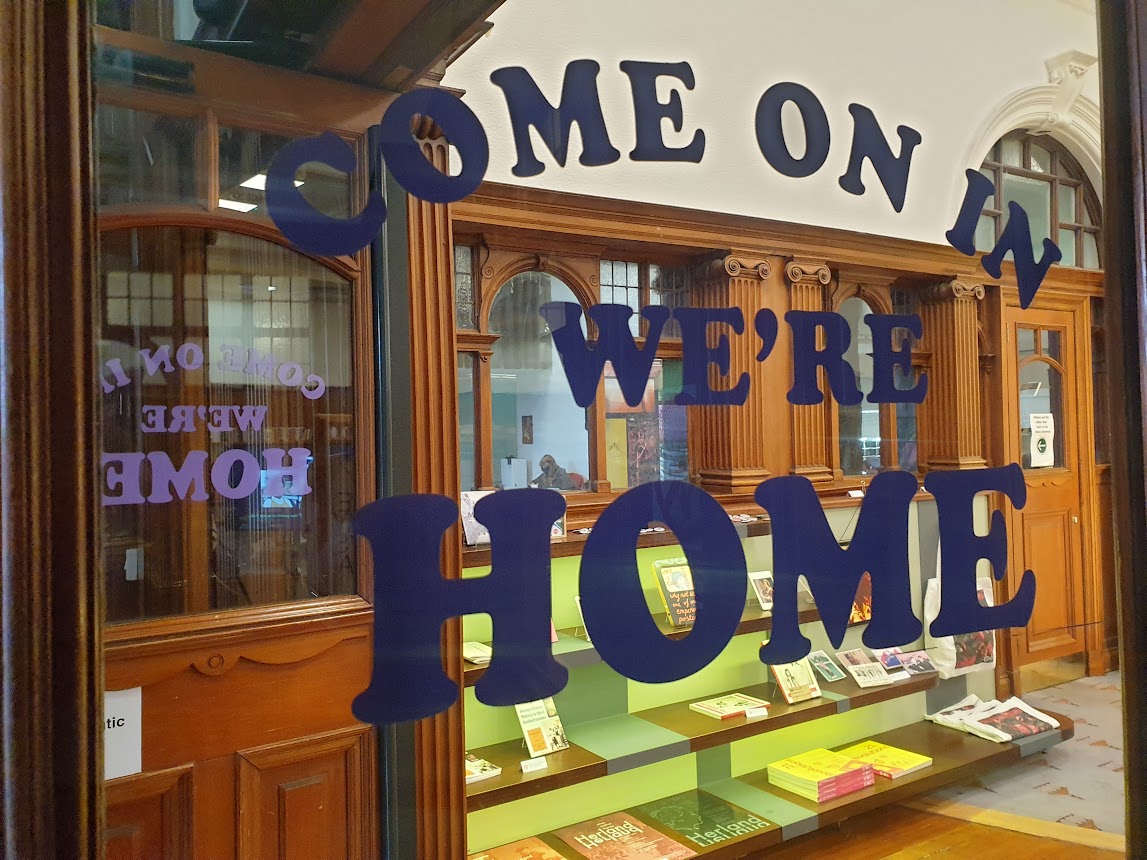
Glasgow Women’s Library with Mae Moss
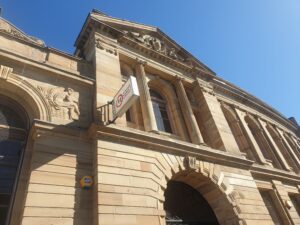
Opened by a collective of artists and activists, Glasgow Women’s Library came out of a feminist response to Glasgow City of Culture in 1990. Since then community has been central to the development of the library, archive and museum. Yeliz speaks to archivist Mae Moss about what makes the space so special.
By Yeliz Zaifoglu | 28.12.26
Glasgow Women’s Library truly shines as a sanctuary offering solace, compassion, and a safe space for learning and growth. In conversations with archivists, a recurring theme often emerges and with this library the word that resonates most profoundly is ‘community’. The profound love and unwavering appreciation dedicated to the volunteers of GWL, both past and present, stand as an incredibly pivotal cornerstone for the lifeline of the library. This fact alone should be the most compelling reason why this place holds such a special significance, apart from its core purpose to champion women, celebrate their diverse stories, and, of course, extend heartfelt affection to Scotland.
Beyond these elements, GWL cultivates an environment where individuals can explore, discover, and connect with a rich tapestry of knowledge and shared experiences. It fosters a sense of belonging, empowering women to find their voices and contribute to a collective narrative that is both inclusive and inspiring. The library's commitment extends to preserving and making accessible the often-overlooked histories of women, ensuring that their achievements and struggles are recognized and celebrated for generations to come. This dedication to historical preservation, coupled with its active role in contemporary community building, solidifies GWL's position as a vital cultural and educational hub.
I’ll leave the story telling to Mae below because she does it for the library so brilliantly, thank you Mae!
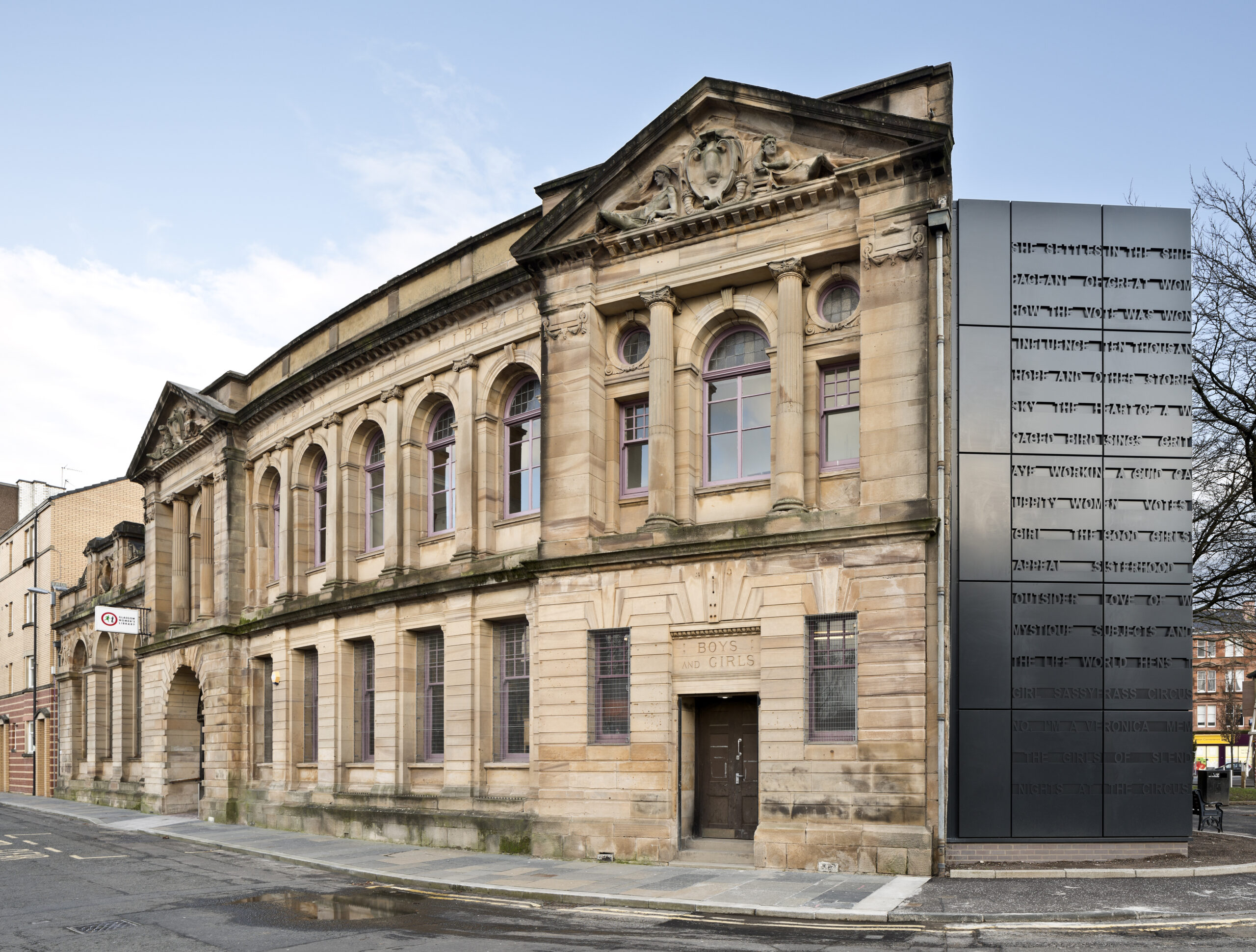
Who are you and what is the Glasgow Women's Library? How did it come to be?
Hello, I'm Mae Moss, and I work here as the archivist at GWL, and have been in this role for nearly three years now. Before that, my role here was as a project archivist on a 30th anniversary project called Three Decades of Changing Minds which sought to interpret, safeguard and share our own 30 year history, looking at how we've come to be and how we're still thriving. We spent time asking ourselves reflective questions as an organisation, looking back to move forward.
I had actually begun my journey with the library as a volunteer in 2018 after I moved to Glasgow from Devon, in the south west of England. I was volunteering at GWL for quite some time before I applied for a staff team member role. Volunteering was integral to the building of my confidence and community here in Glasgow. Along with sharing the values held by the library; valuing all women, addressing inequalities, diversity and inclusivity, openness and respect, learning and development and empowerment, my time spent here gave me the institutional knowledge and feminist leadership tools to step into a role where I could support others who give their time here.
Since 1991, Glasgow Women’s Library has grown from a grassroots, unfunded project to an accredited museum, library and archive that still holds feminist values at its core. The origins of the library stretch back to 1987 where a group called Women in Profile (WiP) formed in response to Glasgow being named the European City of Culture for 1990. It brought together women artists and activists who knew, from their experience of the Glasgow cultural scene, that there was not going to be fair representation of women during the year of cultural festivities. Women in Profile managed to acquire some funding to support the creation of this broad based arts organisation that had many different groups and artists working to deliver a series of programming, events and an international conference during that year of 1990. During this time of organising and connecting across the city a community was formed, this was held physically in their first space on Dalhousie Lane in Garnethill. As humble as it was -
no heating, no bathroom - they were driven by the community to come together and made a collective decision to keep going for women in Glasgow. And so on the 21st of September 1991, at 10.10am, Glasgow Women's Library was launched.
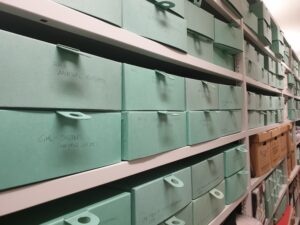
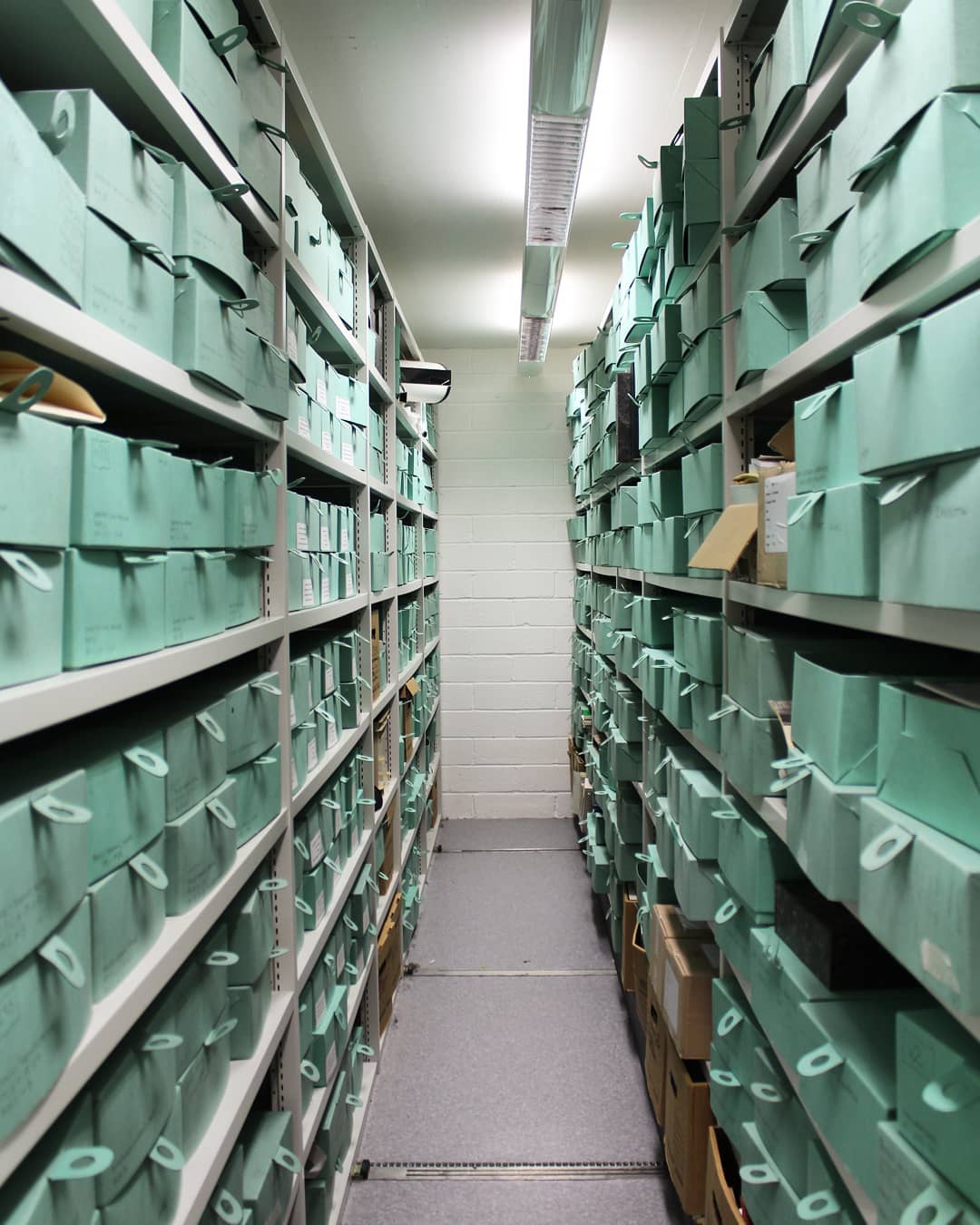
Today, we’re a library, a museum, and archive, we're also a community and a learning space. Our museum and archive collections are predominantly focused on the late 20th century second wave feminism movements and are always about women's lives, achievements, and activism. About 99% of materials here at GWL have been donated over the 30 years and include a periodical collection of well over 100 titles, materials relating to the Women’s Liberation movement, such as newsletters and personal papers and a collection of women’s suffrage items. We also hold archives relating to peace activism and other activists, women’s health and reproductive rights, personal papers of writers; and archives, such as Zero Tolerance that focus on campaigns against violence against women. We hold the Lesbian Archive, which includes records of the Lesbian Archive and Information Centre, and the Camden Lesbian Centre and Black Lesbian Group, hundreds of Lesbian periodicals and records relating to lesbian women and history. This is still one of our largest and most requested collections, donated in 1995.
It feels like every interview I do there's always a huge key word that stands out and this one already feels like its ‘community’! So how do you think going from volunteering and progressing in the institution has impacted your idea of community?
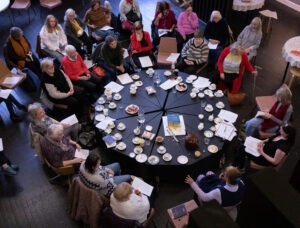
When I first moved to Glasgow, I didn't really know anyone here, but coming to GWL felt like I had found a community, a place to meet and make connections with people from different walks of life, experiences and views. Although now my role has changed, I still feel and experience that sense of community as a staff member - everyday!
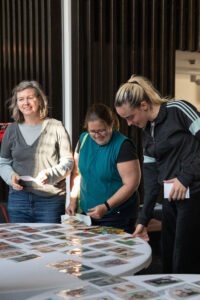
There's a culture here of centring volunteers in particular. We have always relied on volunteers at GWL, as a mostly unfunded organisation for over a decade although the way we approach volunteering has changed since the staff team has developed. My colleagues Gaby and Ren, who work as volunteer co-ordinators, support over 80 volunteers to assist those individuals develop skills, confidence and expertise across the library. It's a process that is embedded and ingrained into our values as an organisation and how we function.
I think I could introduce the first two projects that were funded at GWL that speak to community building, who we support and how we have developed as an organisation: The first being the Lesbian in Peer Support (LiPS) project, which was supported by Comic Relief in 2001 to fund facilitator positions to support a group of young (16-21) lesbian and bisexual women to come together in the library space. LiPS created a nurturing and creative community space for these young women outside of the limited spaces available to lesbian and bisexual women at the time. The second funded project is the Adult Literacy and Numeracy (ALN) Programme which started in 2005 to help women with reading, writing and number, and still today supports women from all backgrounds across Glasgow.
Amazing. It sounds like such a nurturing environment! So my next question is more about the collections, what are the most common objects you find in the archive & museum collection?
We've got a lot of magazines and periodicals! We hold (mostly) full runs of famous feminist and lesbian periodicals like Spare Rib, Sappho, Diva magazine, Red Rag: A Magazine of Women’s Liberation, Feminist Art News and even a few copies of Vogue and Cosmo from the 70s and 80s. Predominantly, we collect explicitly feminist materials from the second wave (late 20th century) feminist movement, also accepting materials that may not be explicitly feminist but help contextualise conversations that were being had around feminism and the role of women in society. We do also have Scottish focused magazines like Harpies & Quines, and some amazing and rare newspapers like Outwrite, which is a lesser known feminist newspaper from the late 1980’s that had a political and international focus on women struggles across the world campaigning against inequality, anti racism and imperialism.
Wow? I've never heard of Outright!!
Yeah! We recently partnered with the MayDay rooms (an archive, resource and safe haven for social movements, experimental and marginal cultures and their histories) on an exhibition called For Peace, where they exhibited articles from Outwrite. I think we have the longest run of the newspaper and we've also got some of the original photographs that were taken as part of the newspaper in one of our larger catalogued archives, the Camden Lesbian Centre and Black Lesbian Group.
That kind of goes into my next question of how significant do you think that addition of the Lesbian Archive was to the library?
It's incredibly significant and has been hugely influential to the development of our library and the collections. It's about a quarter of all of our holdings, detailing not just lesbian history in regards to second wave feminism, but the history of lesbian women, activism and activists; their lives and experiences. The donation of the collection in 1995 did not mark the end point in the collecting of lesbian history, rather, we became the caretakers of the Lesbian Archive collections to which donations are still being made today. To name a few collections - Lesbian Archive and Information Centre archive, London Lesbian Line, the Periodical Collection, Papers of Jackie Forster and Barbaba Burford and the Camden Lesbian Centre and Black Lesbian Group archive.
It broadens that out geographically and is so important for the collection’s history, because there's so much about London yet surrounding areas get lost as soon as you go outside of it. I think its amazing it makes the recorded experience so much wider.
Women would, and still do, travel and post materials from across the UK to donate to us. The collection, I would say, has never really stopped growing and does now more broadly, include LGBTQIA+ materials (with much cataloguing still to be done). So the work never stops on making these collections, and all of our archives at GWL more accessible! It was the 30th anniversary of the donation of Lesbian Archive to GWL last year and we’ve been delivering a programme of events, reflections and an open archive over the past year, with still more to come! So it’s quite a special time.
You can find out more about Glasgow Women's Library on their website and via their Instagram.