Kurdish Archives with Lana K
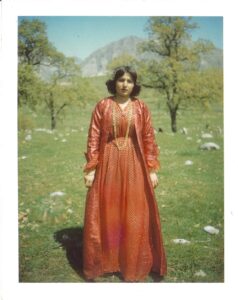
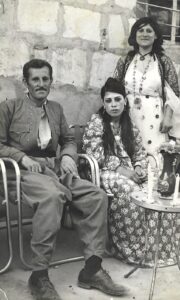
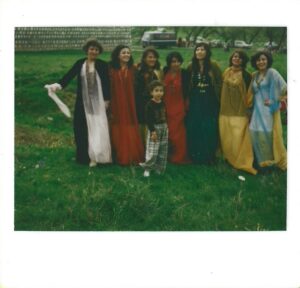
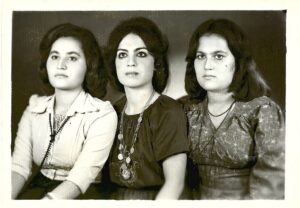
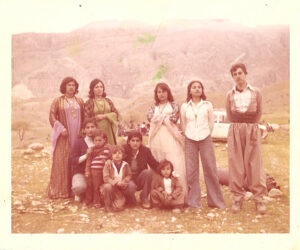
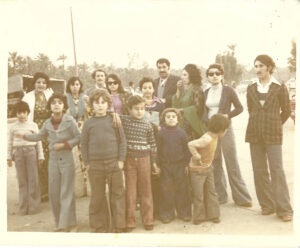
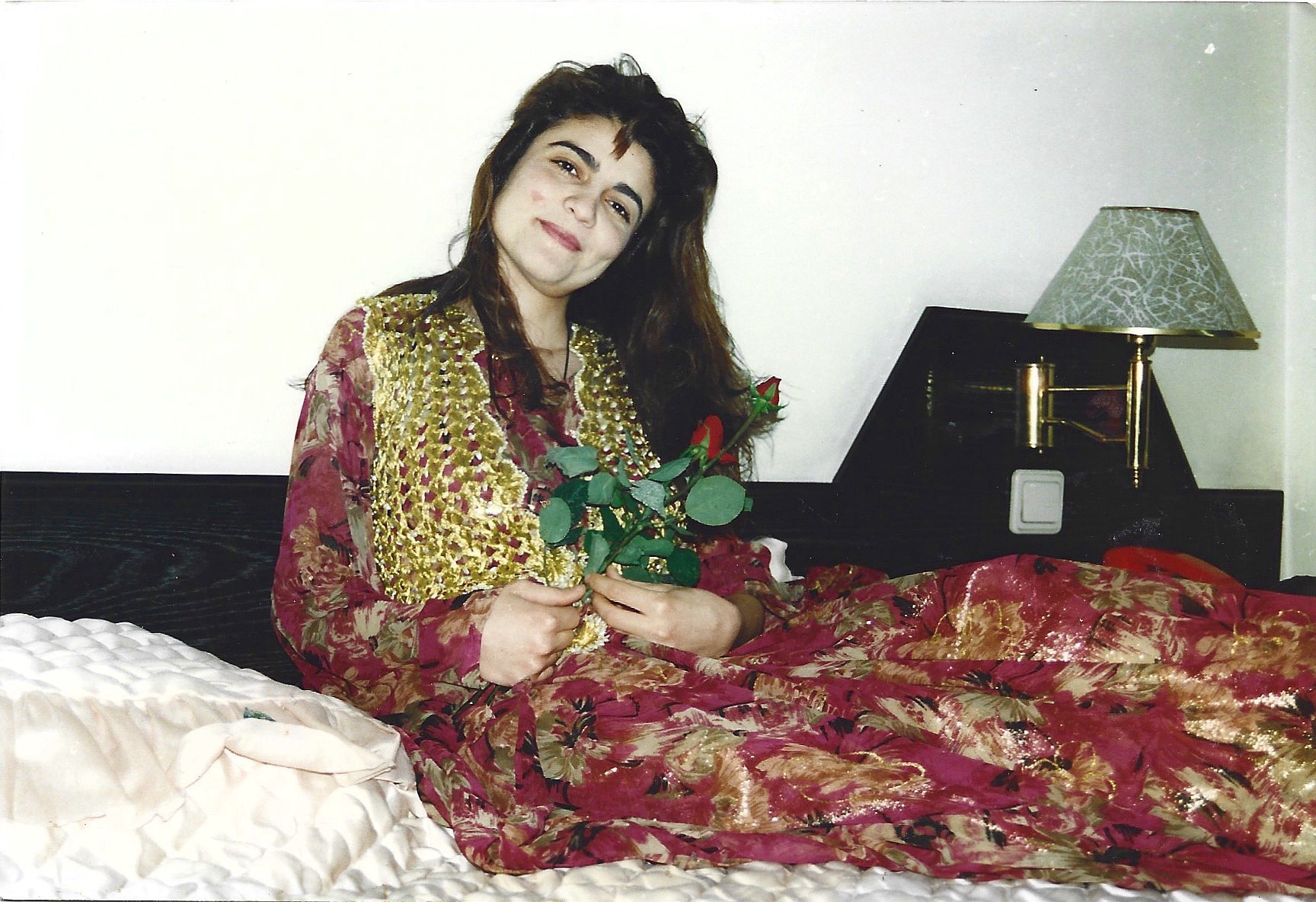
Sitting on a gorgeously curated Instagram, Lana describes her archive as digital Kurdish family album. Championing familiar images with and scenes that resonate with feelings of love , family and resilience. We sat with her and dived into her family albums and the importance of using tools so close to our hearts to change the narrative.
By Yeliz Zaifoglu | 25.2.26
So who are you and what is your archive?
So I’m Lana — and my archive is essentially a digital Kurdish family album. I’ve always been fascinated by the photos we had at home. My mum always had a camera with her when she was younger, and she has photos of people who, in many cases, have never even seen those photos of themselves.
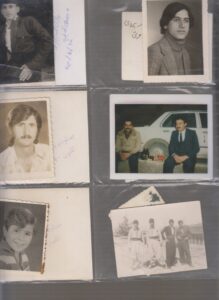
I remember asking her for them one day, and usually my mum stores everything really neatly in albums — but I found that there were a lot of photos kept safely in different bags, like they’d been banished away. They were just loose — in plastic bags, in suitcases. They weren’t seeing the light of day. And I felt like something needed to be done with them. At the same time, it was the first time my mum had seen these photos in years. I think there was an avoidance there — which is so typical in our cultures. There’s trauma in these pictures.
But I’ve always loved photography and archiving. I wanted to find a way for people to see these photographs the way I see them — but also for the people in them, or their families, to reclaim and share them again. Almost distribute them publicly, but on their own terms. There are some I won’t post without permission — especially when it’s someone’s last image before they died under tragic or violent circumstances.
For years, these images sat in the dark. Now they go wandering — from old photo bags to screens, from our past into your eyes. What if we honoured lives not for what was lost, but for everything that was lived in between?
Growing up, I saw a lot of violent imagery being circulated — often without context, consent, or care. Pictures of bodies were snatched by French and other European journalists who had access before Kurdish people. I felt like that was the only way people spoke about Halabja. That violence became the headline, the identity. It’s a hijacking of Kurdish bodies and pain — used to reinforce a narrative, while also subconsciously feeding into this idea of Kurds as only victims, stripped of autonomy, even in death. And it’s like, why is that the only story we’re allowed to tell?
But really, I’m trying to build a bridge: to take these images out of the dark and have them appreciated, in the right way, by the right people. I’d like to show the lives these people led before becoming victims.
When I started, it was because I was tired of people constantly poking at trauma without understanding why—or what for. Not every Kurdish story has to only be sad.
Yeah, I absolutely like changing the narrative! Not just for you and your family, but also, on a wider perspective…
For sure. And just, like, rebrand it a little bit! Not to take away from anything or forget but just try and remember that there are stories and lives outside of the trauma of these people in the images.
We can celebrate the lives that were lived—their stories told through personal accounts or by their own families—not just by someone running a Kurdish archive to serve their own interests. So we can see everyday modernities. Sometimes it feels like these archives are curated more to push a certain narrative or image, rather than to honour the actual people in them. Whether it’s for prestige, influence, or to fit a political agenda, it can start to feel more like propaganda than preservation.For me, it’s never been about that. I just kept thinking—why can’t we treat it like a family album? Why can’t it be about joy, about the everyday, about memory for memory’s sake? That’s what I keep coming back to. I want to celebrate Kurdish joy. And yeah, maybe that sounds like a cliché, but we focus so heavily on the bad that it almost erases the rest. I think we’re capable of holding both—the grief and the joy—while also making our stories more accessible, more real, and more ours.
How do you collect? Do people just send them to you? Or is it more like in person?
Initially, it was from the collection of photos we had at my house — that my mum had genuinely rescued. Her home had been raided and taken over by the Iraqi army multiple times, and many people lost their belongings and homes. But my mum and her family made sure these photos were kept safe. In the diaspora, there’s often a habit of protecting items that carry memory — photos, heirlooms, small treasures — sometimes above almost everything else. She was like a guardian of them. I don’t even know how she managed it! She travelled all over with these pictures, and they’ve been the most precious things she’s kept close.
Other than that just submissions online really, although I will be branching that out very soon. I also went through my aunt’s collection and hope to access local stories back in Kurdistan.
What does the archive mean to you?
Lana
For me, this archive became a way to push past the cultural gatekeeping I’ve often felt exists within the Kurdish community — especially around who gets to tell our stories, and how those stories are shared. Because we’re so underrepresented on global platforms, there are only a few Kurdish narratives that get any attention, and they’re usually centred around trauma, war, or political struggle. I wanted to challenge that narrow framing by creating something personal — a space where I could reclaim the images and stories I grew up with.
But that doesn’t mean I want to ignore or avoid reality either. That trauma is part of our community — it’s around us and it’s in the photos too. At the same time, as a new generation, we also carry a responsibility to find different ways forward — ways that reflect how much has changed, not just in the region, but in how our stories are told and understood.
Archives, both in Kurdistan and elsewhere, are rarely neutral. They’re often controlled by a select group of people or institutions, and that control tends to reproduce the same narrow storylines. Too often, this means an echo chamber of trauma-focused material — images and documents that sensationalise Kurdish suffering while sidelining everyday life, joy, and cultural memory. The result is that whole generations are left with a distorted version of history, curated more for outside consumption than for the communities they actually represent
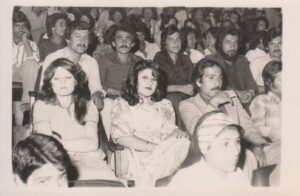
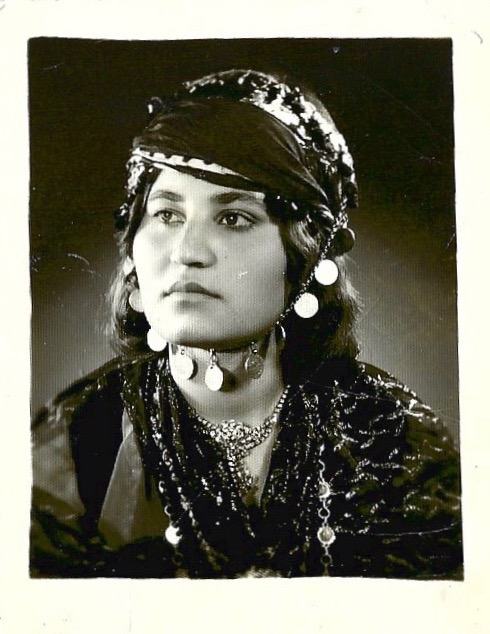
There are so many versions of what it means to be Kurdish, and I want the archive to reflect that. I want people to see Kurdish clothes, Kurdish jewellery, what it looked like to go to university, or getting married — not just the simplified versions that others expect of us. This is about making space for the everyday, the joy, the ordinary details of life — while still holding space for the grief too.
An archive isn’t just about looking back — it’s about saving pieces of memory for both the past and the future. As narratives shift over time, there’s a real risk that parts of the previous generation’s culture and history could be erased or overlooked.
No, it makes so much sense because when you're from certain parts of the world it's really easy for your history to get put into a box and it's hard to just accept it when you know it's wrong. It’s like “we've wrote you down. You should be happy about” , but it's like no. And I think the younger you realize that, the more inclined you're to change it. Our parents, and even before our parents, they might have had the idea, but to do it was a lot more scary and harder, because there was more at risk, whereas now we're like, there's not as much at risk in terms of our actual life or death.
How has it been exploring those images? let alone sharing them? It's quite a personal thing, and you're dealing with a lot of generational trauma.
I remember I was unemployed, and I was like “I need a project now” Like, I'm gonna go insane. So my Mum was like, “What do you want to do?” and I said “give me photos!”. I got carried away with it. But at the same time, it was because I had seen pictures of people that I had never seen, people that I obviously knew and heard so many stories about, but I had never seen certain pictures of them. My view of them just completely shattered, because it was like again. It's like recycling of a story that is being told over and over again, and you build up this image over the years but then, not in a bad way, that shatters and changes your visualisation. It was very interesting navigating that with people that you could tell, you know, stories of people that parents don't really want to talk about and don't want to get involved in.
I could tell these people had visually meant so much to me, because it was giving me such an emotional response. And it was just very strange because, like, some of these people I've never even met, I don't even really know them. But it was kind of just like, in a way, trying to give people back those images. There were so many family members I didn't even know I had that I found because of this archives page. Like, I've been connected to multiple cousins that I didn't know!
It's like Ancestry DNA!!! That's cool. So sick. So many cousins!! That's amazing. I love that so much. Do you have plans for the future?
One of the main things I think about is how we can make this into a positive thing for future generations that can actually access this. When I was at school, no one knew anyone that was doing projects, and there's nothing online, like nothing online — no sources, no nothing. When there was it's like $150 for a journal article that you have to pay to get through. I just didn't have images that I could use, besides when I went to go out myself and actually found books and could scan them, but there was just nothing online for me. It's like if a kid who was around the same age I was then wants to do a project, wants to find out more stuff, can actually go onto their website, or go onto an Instagram and find a category dedicated to like the clothing or the landscapes, the areas, anything that they want, point is they can access it. It's as objective as it can be, regardless of the fact that anything that we do is almost like, always probably going to be like, inherently political. At least there is access.
What it sounds like is you essentially want to become a free resource?
Yes! For sure. I don’t want it for personal gain. I just want to continue what I’m doing. It’s still early days, barely even taken off, but it’s already created so many connections. It will expand to digital videos and other content, again with accessibility in mind. It won’t be payable or gatekept for financial or personal gain. It’s going to be something kids can use, reference, and learn from.
Yes! For sure. I don't want it for personal gain. I don't want it for anything besides carrying on with what I'm doing. And it's such early days for me, it's barely even taken off, but it's already created so many different connections. It’s going to move on to more digital videos and things like that, hopefully. But again, it’s just an accessibility thing—it’s not going to be payable. It’s not this gatekept thing that someone wants to use for their own financial or personal gain. It’s going to be something that kids can use, resource, and refer to if they need to.
I'm also going to start including more individual profiles—highlighting specific people and their stories—and eventually transition into archiving diaspora experiences too. Especially those from younger generations, who often feel quite disconnected but still hold onto fragments of their cultural memory. I think there's something really powerful about bridging those gaps and showing how the archive evolves across borders and generations.
You can find out more about Lana's archive via their Instagram.