No Licence Archive with Felix Dean
A homage to London’s Y2K Grime scene, No Licence archive is the brainchild of Felix Dean. Reflecting his experiences growing up, the collection emerged organically. Yeliz went to visit the archive and spoke to Felix about how it all came to be.
By Yeliz Zaifoglu | Photos by Yeliz Zaifoglu | 25.06.25
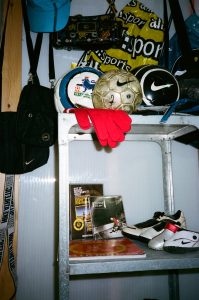
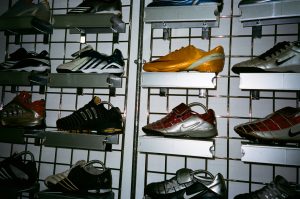
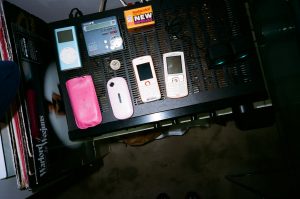
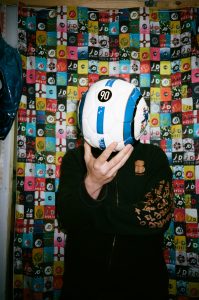
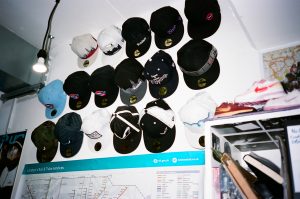
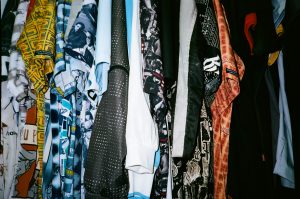
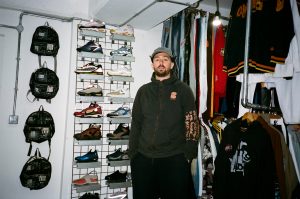
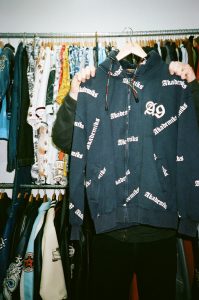
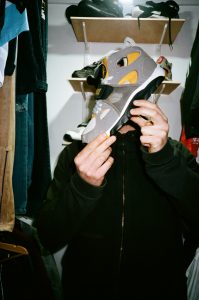
Hiding in Peckham, Felix Dean fathers the No Licence Archive. Walking into a reworked carpark, now Peckham Levels, always feels like it will be a surprise and I felt nothing but gassed coming into Felix’s hidden gem. From racks flooded with Akademiks tracksuits, multi coloured Avirex’s to baby Air Max's, the space screams gun fingers and cyphers. Coming from archival roots and prolific in collecting and reselling, Felix has built an archive for everything early 2000s, London and Grime - being really the first of its kind.
Felix and I chatted through what it takes to maintain an archive and the importance of believing in the history of what you collect, especially if it's something that is so intrinsically a part of you. Archives would be nothing without their archivist and their niche interests, and if someone tells you otherwise - (I think) they may not be doing it right.
Right, hello. What's your name and what is No Licence
My name is Felix Dean and No Licence is an archive focusing on the emergence of Grime music in London in the early 2000s, without discrediting the importance and impact that American Hip Hop had on that scene and movement through collections of clothing relevant to the time and associated objects and accessories, etc.
And how and when did it start?
So I think I've personally been buying and selling clothing all my adult life. I was 16, so that was 17 years ago. The archive's official start date will have been 2014 or 15, but the collections that are now within the archive would have started to come together before that. It was started alongside my friend Mark Dear initially as a shop, and then when you start amassing collections of products where the cultural impact and importance of telling origin stories of significant subcultures are more important than the financial value attached to products, you can't let them go. I think that is where you decide that something is archival.
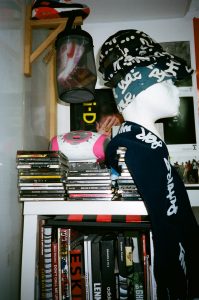
So obviously you already had this trade in selling but when you recognized the cultural value in your objects - was that, because you was involved in those subcultures yourself?
Just growing up in London at that time. I think the biggest thing for me was growing up in South & East London - my mum living in South East London, my dad living in East London - and traveling between South and East every other weekend was just not something that people did. Like the sort of differentiation between certain ends was quite distinctive and clear. Peckham wasn’t Hackney. Transport networks weren't as comprehensive as they are now, and just that sort of broader view on what was happening across parts of London, I think influenced and educated, why I think that time was really important.
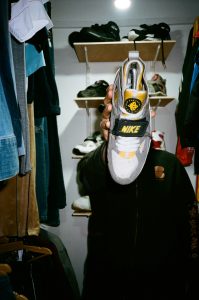
And then my older sister would pass me down trainers and I'd wear them to secondary school. It was the Huaraches with the strap and I just remember people saying, like, what are those? Where did you get those from this or, like, I couldn't actually tell you they were passed down. And yeah, going to an all boys school where, you know, music was shared across mobile phones, on buses, pushed up to windows on coaches back from football matches, that sort of insight into what was a new movement and subculture was really interesting to be immersed in. I wasn't making music at that time, so I wasn't fully in it, but I was on the periphery and very aware of like what was happening.
Still in the middle of dance tho, yeah?
I wasn’t in, like, the clashes in school, I was watching over the shoulders, you know.
How did you and do you go about collecting?
I tell you, my dad's a hoarder, nice. And my grandma and granddad ran a museum of the local area they lived in and have written many books on local history. They've got a library in their house. My granddad has archives of photographs of his travels in the 70s and I’d look through them constantly. They were very much the most knowledgeable local historian in a small town outside of Leeds. There was a quote in my Grandma's obituary that will come into it, like it wasn't a paid thing. It's like they did it because it was important, and they believed that the impact and the knowledge should be archived and then available for future generations to engage with.
“They endlessly campaigned, discovered, sourced, collected, catalogued, researched, conversed, preserved, wrote articles, educated and saved Otley’s history for the people of Otley and all this selflessly, without payment, for the sheer love of it and because it was important”
I was brought up around people that collected and preserved things more so than some other people would have been, and then also, everything I wore as a child was secondhand, so everything came from charity shops or car boot sales or was passed down. So I just was always in and amongst bits and bobs. And then how do I collect? I think over the years I've struggled with collecting too broadly. I'm trying to focus on specific brands, Akademiks, Lot 29, Wale Adeyemi & Nike. Trying to move away from American hip hop stuff as it's not as relevant to what I'm known for.
It sounds very much like that it's quite innate.
There was never a conscious moment where I went, “I want to be a collector” or “I want to be an archivist”. It's just how I've existed as an adult. I, hand on heart, can say I've never made a choice with the financial reasoning at the forefront of why I do it. Now, I have to run it as a business to sustain it. But it wasn't started as a business idea. It was just a natural progression.
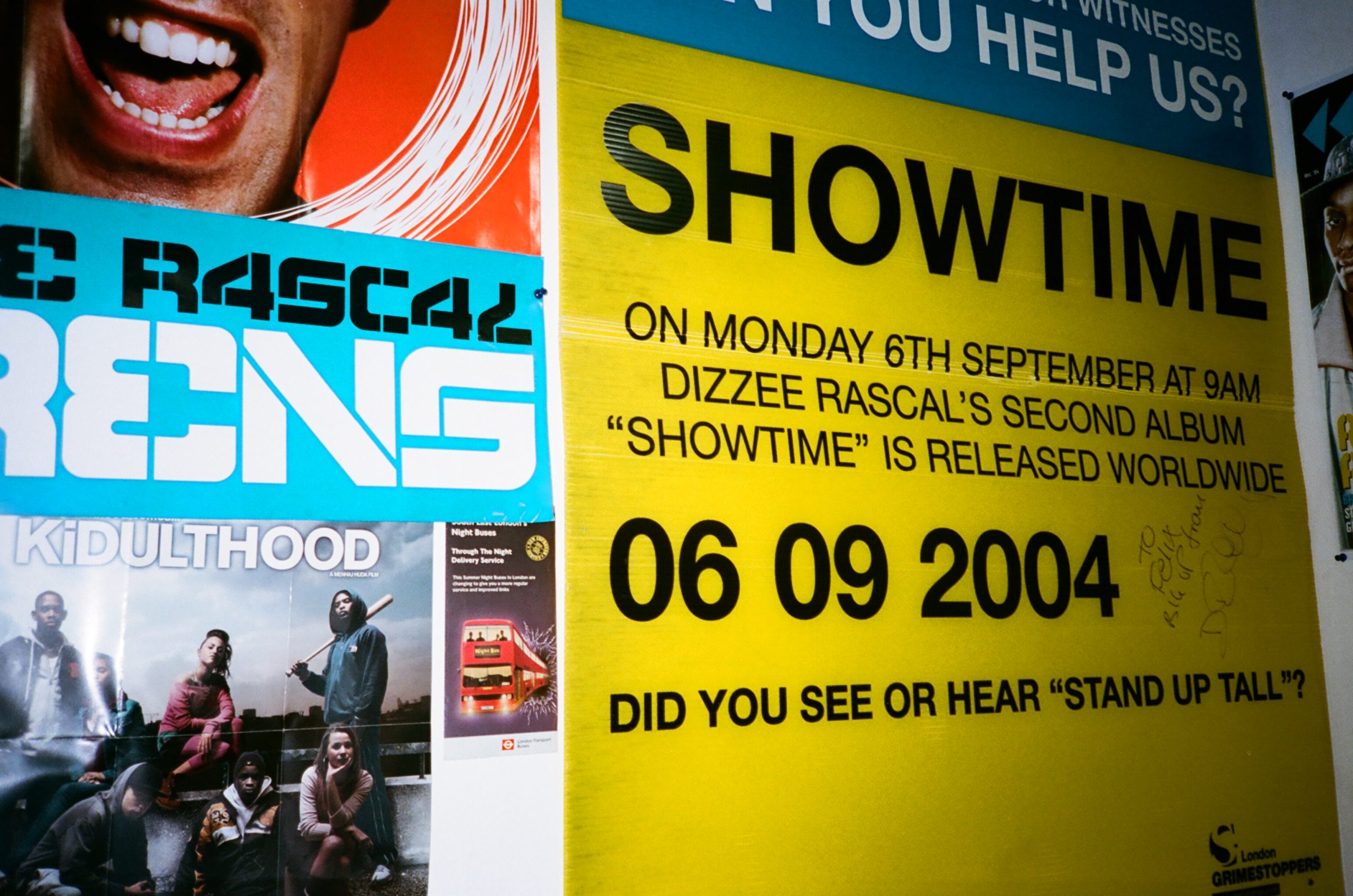
You've already kind of said why, but I'm wondering if you had a more direct answer, of, like, why so niche? You pay homage to the American roots, but it’s all you're very homegrown. Whereas I feel like a lot of archives that touch on this area, grime is never the forefront, which is jarring, but you're different.
My thing's always just been, I'm from London. I live in London, that's what I know. I can't speak on anything else with a level of knowledge. I don't really have an interest in expanding too far beyond because then it comes into that thing about, how do you collect? And I want the collections to be as close to home as possible, like I've never worn Stone Island, you know? I mean, I'm not gonna go out and suddenly buy Stone Island, because everybody wants Stone Island. That's just not how I've operated.
I'm not catering for the people, I'm catering for myself. If the appreciation comes along and it can be accessed by other people that's great, but it's basically just me being me. Being a hoarder and saying this is what I believe will stand the test of time. It's not always easy to see in the moment. It's like I couldn't say that it is important. It may become more important in 10 years, it may not, but I'll still be doing this all my life, you know? I mean, it's not a business that's gonna suddenly start losing money and then I'm gonna pack it in like, it's a passion. Archive’s always gonna be there.
Do you have one or two objects that are your particular favourites or that you always end up going back to?
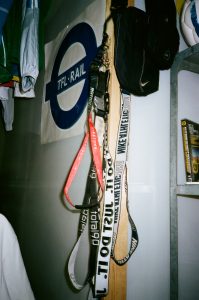
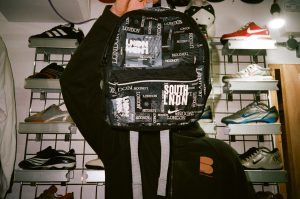
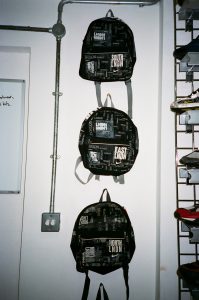
I'd probably say the Just Do It bags the South one. They just say secondary school in London. And that was the time when all of this stuff started becoming apparent. You could only buy those bags in JD Sports in that arena - you could get the south one in Peckham or Catford, and East one in Dalston or whatever.
And how did you get them?
I've actually got so many of them. I've got about seven of the South London ones, really. People always ask me are they for sale and I’m like NAH. I can't remember where I got my first from.
And so what does No Licence mean to you, as you're the founder?
That's a good question. I'm not sure what it means, but I just feel like it has become like an extension of who I am and how I conduct myself and how I am known. Like a lot of my friendships, like a big part of them, was built through distribution of clothing to people, and now being able to do that in a different way, and having collections that I don't let go of is a madness.
Okay, there was a time in my life where I made it important to step outside of your own body, look at yourself in situations you're in, make adjustments to how you're conducting yourself or the people you're putting yourself next to. I remember having that experience and making some drastic changes. I feel like now, if I was to do that, I'd step back and I'd look at me and No Licence, and we both exist together. We coexist.
What opportunities has No Licence opened up for you?
I guess, like the most recent one, working for B-side London with Walé Adeyemi as his archivist, is an amazing opportunity for me. I'm genuinely gassed, proper grateful that I'm able to do that. Yeah, touching for me, and I go through his physical archive, and it’s emotional to finally be able to marry up, like original images and sketches with products that I've owned for a long time.
It's nice to be recognized by somebody that I have respect for. And I think that says a lot about me, you know. Like, he was super impactful in British street culture and fashion.
Sick, so sick. Are there any significant future plans, or is it just keep it going where you've been going, see what happens?
To sit down and properly work on the future plans! In all honesty, because the collections are at a point where, you know, they do fill the space. I think the next plans are better documenting what I have and trying to do that through being slightly more collaborative in nature with other people. No grand plans. I also have a day job and buying and selling takes up a lot of time so I'm probably gonna keep on trudging along. I’m good, I've got a pillow to put my head on and I can't complain - why would I complain?