An Archivist's Diary: Family Annotations with Souvenir de l’Algérie
Starting from family photographs recently shown as part of an installation at Tate Britain, Souvenir de l’Algérie evolved into a visual archive documenting and preserving Algerian histories, with a special focus on photographs from everyday life.
We sat with Meriem to discuss the importance of family archives, and chat about the evolution of the project, from its initial stages to future plans.
By Yeliz Zaifoglu | 25.11.26
Would you like to introduce yourself and your archive?
I'm Meriem Mecili, a London-based artist of Algerian heritage.
One of my ongoing projects is Souvenir de l’Algérie, which is a growing photographic archive dedicated to preserving and documenting the lives of Algerians, from the colonial period through to the years following independence.
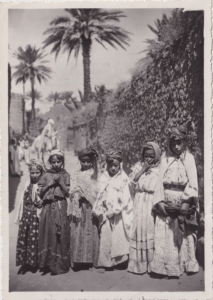
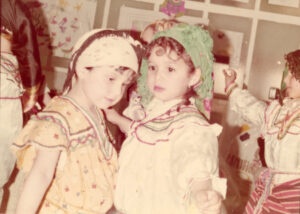
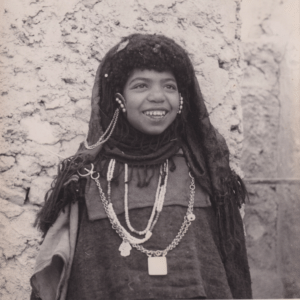
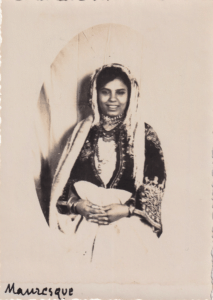
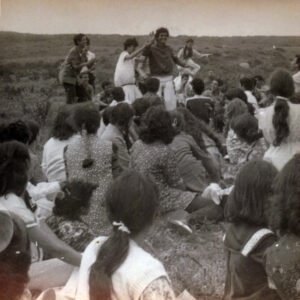
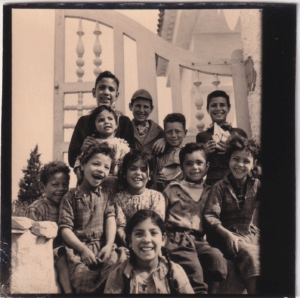
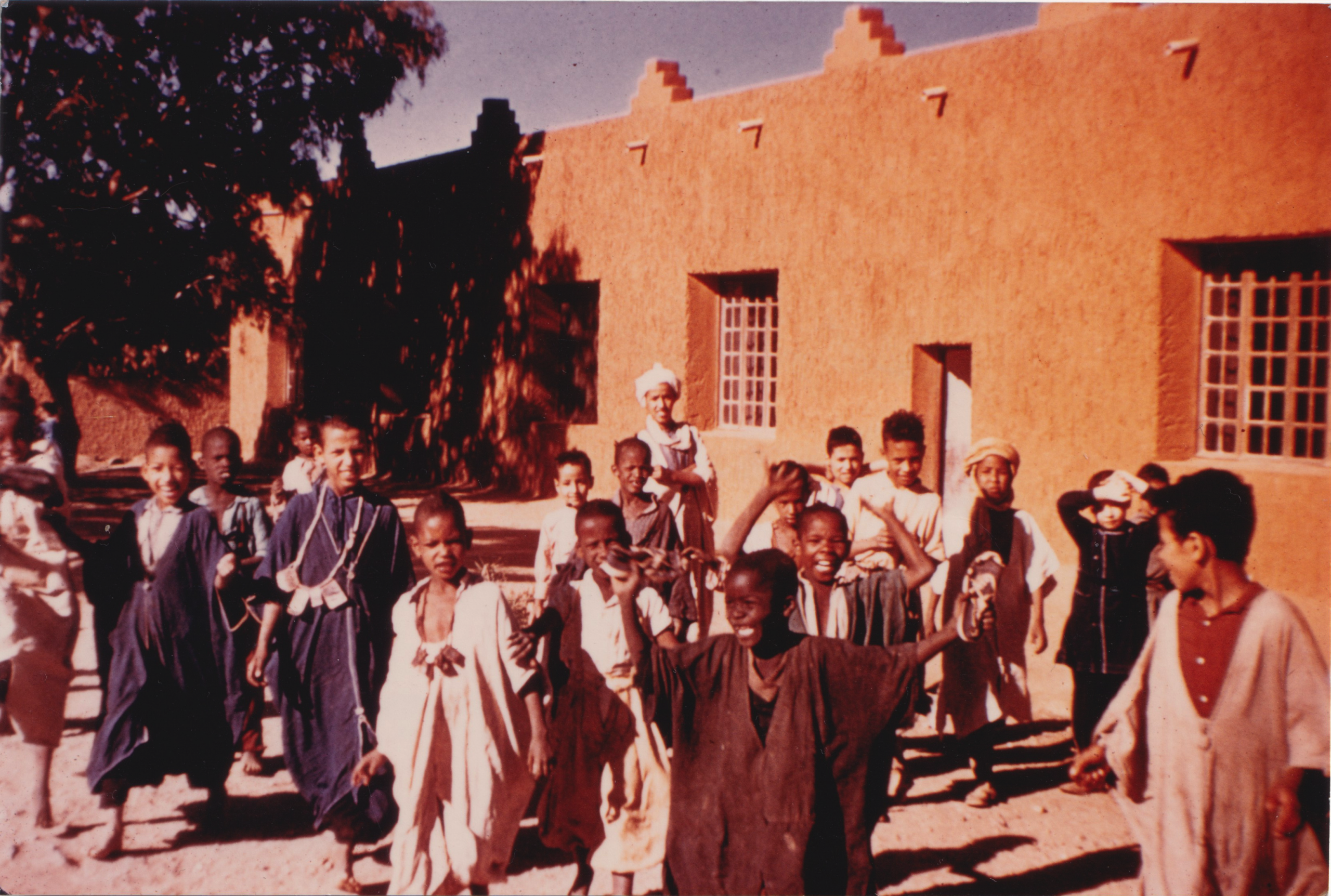
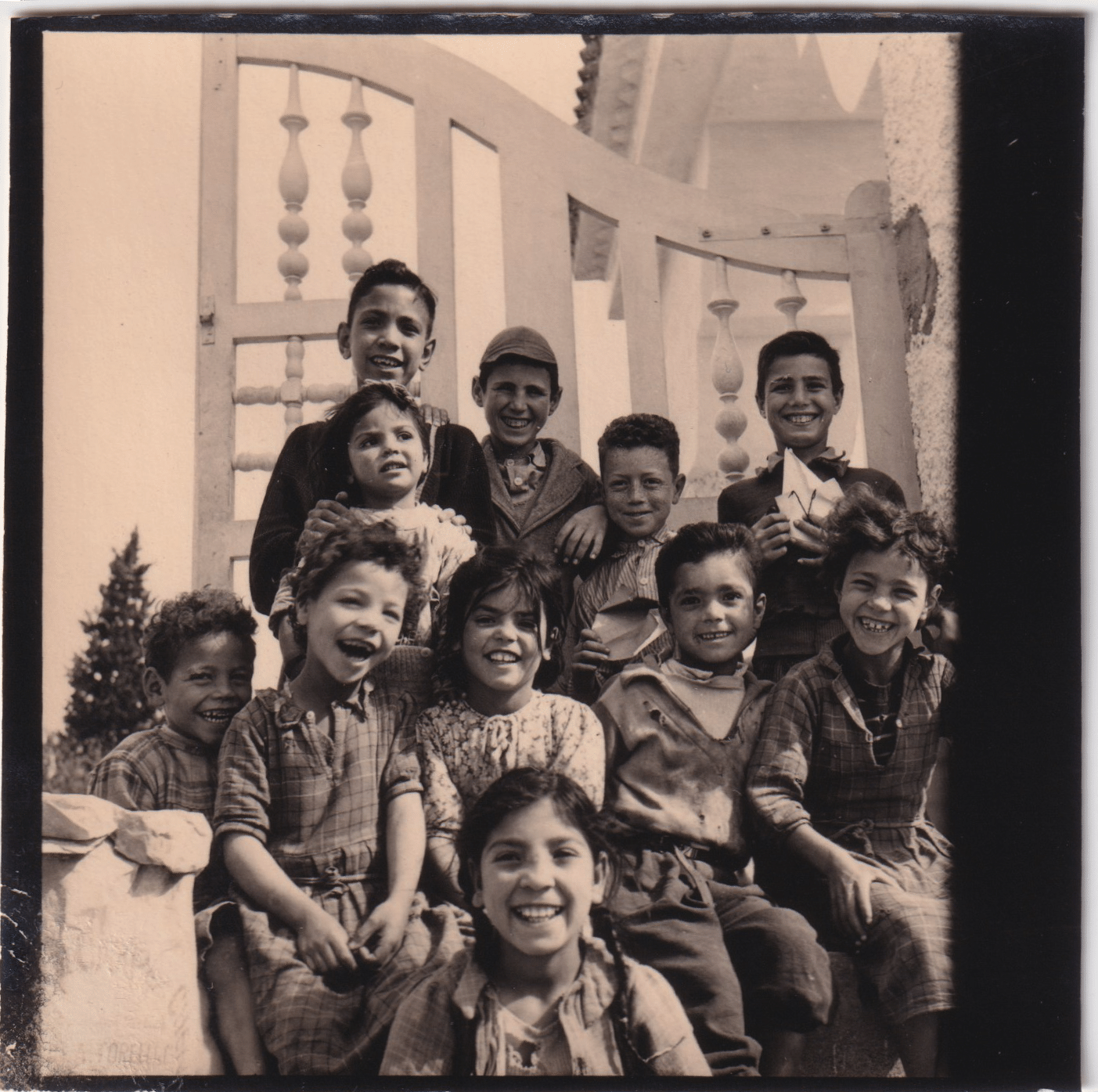
The collection is made up of different types of photographic material, including studio portraits, family photographs, postcards, negatives and identity photographs. Some come from my own family archive, while others are photographs I've collected over the years.
I'm particularly interested in the everyday lives of ordinary Algerians. How they dressed, their hairstyles, the jewellery they wore, their homes, their family relationships and the different ways they chose to present themselves in front of a camera. I think sometimes when we look at historical photographs of Algeria, particularly those from the colonial period, we're so focused on the political history that we forget about the ordinary people who were living their lives throughout it. And that's something I'm really interested in preserving.
For me, Souvenir de l’Algérie is really about bringing these fragments of memory together and making sure that these people and their histories aren't forgotten
How and when did this archive start?
Souvenir de l’Algérie initially began with collecting and preserving my own family photographs.
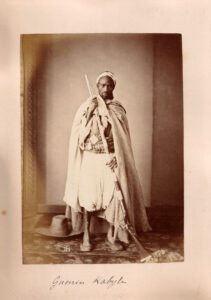
I've always been interested in family histories and the stories behind photographs, particularly the small details that can tell us so much about a person's life. But in terms of actually purchasing photographs of Algerians outside of my family, it started when I came across an old photograph titled Guerrier Kabyle, which translates to Kabyle warrior. What caught my attention was that the caption identified him as Kabyle, from northern Algeria, while his features reminded me of Black communities in southern Algeria.
I recognised his face from other historical photographs of Algeria that I'd seen circulating online. I remember feeling an immediate connection to the photograph. I was fascinated by how he looked, how he was dressed, but also by the title itself and the possibility of misinformation surrounding it. It made me think about how the French documented Algerians during the colonial period, how they chose to represent people, and how much of the information attached to these photographs actually reflected the lives of the people pictured.
So I bought the photograph, and that became the first historical Algerian photograph I purchased for what would eventually become Souvenir de l’Algérie. I began purchasing more photographs and postcards, and gradually the collection grew into something much bigger than I'd initially imagined. What's really interesting is that for years afterwards, I continued seeing photographs of this same man circulating online, particularly when people were discussing traditional Algerian men's clothing, but I could never find another photograph of him available for sale. Then, quite recently, I came across a photograph of a group of Algerian musicians, and I immediately recognised him among the men. I added the photograph to my collection, and then I managed to find another photograph featuring him. So now, after all these years, I actually have three photographs of the same man.
In the first photograph, he's identified as a Kabyle warrior, wearing a burnous and carrying a rifle. But in the more recent photographs I've collected, he's pictured among a group of musicians. And it makes me wonder who he actually was. Was he a warrior? Was he a musician? Could he have been both? Ultimately, these were ordinary people who had lives beyond what we see in the photographs. They had families, occupations and personal histories that we might never know about. I don't necessarily want to question whether he was a warrior or a musician. I'm more interested in understanding who he was beyond those descriptions. And I think that's something that continues to drive my interest in collecting photographs of Algerians. It's not just about preserving their appearances, but also recognising how much of their stories might still be missing. So in a way, my entire collection really began with my curiosity about one man whose name I still don't know.
Why did you call it Souvenir de l’Algérie?
The title actually comes from something quite personal.
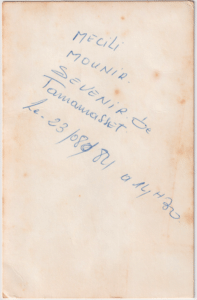
When I was looking through my family photographs, I noticed how my father would write little annotations on the backs of them, things like Souvenir de mes amis, Souvenir de Tamanrasset or Souvenir de ma famille. And I really loved that idea of a photograph being a souvenir, something you keep to remember a person, a place or a particular moment in your life. So Souvenir de l’Algérie is also a little homage to that tradition within my own family and, funnily enough, to my dad’s own way of writing in French.
I’ve actually had quite a few people debate with me about whether it should be Souvenir de l’Algérie or Souvenir d’Algérie, but I refuse to budge on the title simply because of what others consider to be grammatically correct French. I actually love that, to some people, it might be considered incorrect.
French isn’t Algeria’s first language, and just like with Arabic, we’ve developed our own ways of speaking and writing that reflects our identity and experiences. And there’s something quite beautiful about that.
How do you go about collecting? Or is this more of an archive built from your personal family collection?
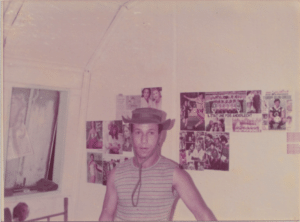
It's actually a mixture of both. My own family photographs are really important to me, and they've influenced a lot of my artistic practice, particularly my interest in identity, migration and the ways families preserve their memories.
But with Souvenir de l’Algérie, I wanted to look beyond my own family and explore the lives of other Algerians. I spend a lot of time searching through online auctions, second-hand marketplaces, individual sellers and photographic collections. Sometimes I'll come across a single photograph that catches my attention, and other times I'll find entire groups of photographs or albums that have been separated and sold individually. And that's something I find quite upsetting, because when these photographs are separated from their original collections, there's often so much information that gets lost with them.
Sometimes you might have a name, a handwritten message, a date or a photographer's stamp on the back. Other times, there's absolutely nothing, and you're left trying to understand who these people were through the photograph itself. When I'm collecting, I'm particularly drawn to photographs of women, children, families, and Algerians from Southern and Black communities, whose racial and cultural diversity is often overlooked in representations of Algerian identity.
Of course, collecting is expensive, especially when you're purchasing historical photographs independently. I don't have an unlimited budget, so I have to be selective about what I buy.
And that means sometimes having to make difficult decisions about which photographs to prioritise, particularly when I come across images of people or communities who I feel are underrepresented.
I also think it's important to acknowledge that a lot of the historical photographs I'm collecting were taken by French photographers during the colonial period. So while these photographs are incredibly valuable as visual records, I'm also conscious that they don't always tell us how the people pictured understood or represented themselves. There's a difference between how someone chose to present themselves and how someone else chose to photograph and describe them. That's something I try to keep in mind when researching and documenting the collection. Ultimately, I want to preserve these photographs while also questioning the information that accompanies them, rather than automatically accepting every caption or description as fact.
How do you think starting with your own family archive has impacted your practice?
My family history has always played a really important role in my artistic practice, particularly because so much of what I know about my family's experiences in Algeria has come from photographs and conversations with my relatives. I think growing up in the diaspora, there's always this curiosity about where you come from, particularly when you're trying to understand a place that your parents and grandparents experienced very differently from you.
One of my earlier projects, Documenting Djedou, actually began when I started filming conversations with my grandfather, Mohamed Benzehda, who was born in 1931 in Aïn Arnat, near Sétif in Algeria.
He lived through French colonial rule, the Algerian War of Independence and eventually migrated to France after independence. I started recording his memories because I became increasingly conscious of how easily these stories could disappear if nobody took the time to preserve them. He would tell me about his childhood, his experiences growing up under colonial rule, the work he did when he was younger, and his involvement in the independence struggle. And what I found particularly interesting was hearing about these historical events through the experiences of someone who had actually lived through them.
Because when we learn about history, we're often taught about major events, important dates and political figures, but we don't always hear about how ordinary people experienced those moments in their everyday lives. I also began digitising our family photographs and connecting them to the stories he was telling me, which helped me understand how photographs and oral histories can work together.
Sometimes a photograph can tell you so much about a particular moment, but without someone there to explain who the people are, where it was taken or what was happening, so much of that information can eventually disappear. And I think that's something that has stayed with me throughout my practice.
My family photographs are so precious to me, not necessarily because they're historically significant in the traditional sense, but because they preserve people, places and moments that are part of my own history. I've become much more conscious of the responsibility we have to preserve these memories while we still can. So although my work has expanded beyond my own family, I think that personal connection has always remained at the centre of what I do.
Can you tell me more about what you’ve made out of the project so far?
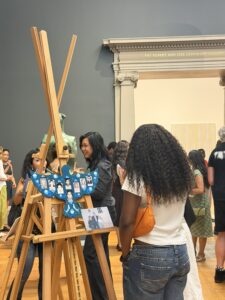
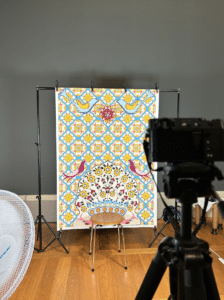
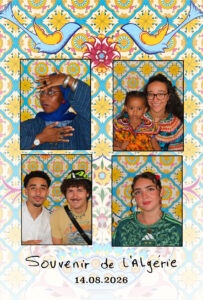
One of the projects that developed out of my interest in archival photography is called Identity in Transition, which I recently showed at Tate Britain alongside my pop up studio.
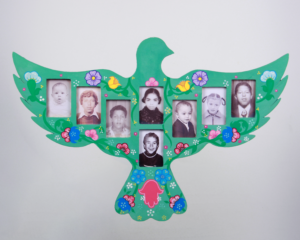
The project looks at Algerian identity in the years following independence, specifically through identity photographs. I started looking at ID photographs within my own family archive and became really interested in how much you can learn about someone from an image that was originally taken for an administrative purpose. Because although these photographs were intended to identify someone, there's still so much individuality within them. You can see it in their hairstyles, the clothes they're wearing, their jewellery, their facial hair, even the way they're posing or looking at the camera.
And I find that particularly interesting in the context of post-independence Algeria, because you have people navigating a period of enormous political and social change, but you can also see these smaller, more personal expressions of identity. For the installation, I displayed the photographs in hand-painted wooden bird-shaped frames inspired by traditional domestic objects and furniture from the Casbah.
I wanted to take these photographs away from their original administrative context and present them in a way that felt more personal and connected to Algerian domestic life. And that interest in identity photography also led me to develop an interactive portrait studio for Tate Britain, where visitors could have their own ID-style photographs taken and printed to take home.
What are the future plans for the archive?
There are so many things I'd love to do with Souvenir de l’Algérie. At the moment, I'm still very much in the process of collecting, digitising, researching and organising the photographs. It's an ongoing archive, and I think it will probably continue growing for as long as I'm able to collect. One of my biggest ambitions is to eventually turn Souvenir de l’Algérie into a book.
I'd love to create a publication that brings these photographs together, not just as a collection of historical images, but as a way of exploring the everyday lives, identities and experiences of Algerians across different periods. I think it would be particularly meaningful for Algerians in the diaspora, because so many of us have grown up with fragments of our family histories, whether that's through photographs, stories told by our parents or grandparents, or memories of places that have changed over time.
Find out more about Meriem and support the project on their website and on their Instagram