Working Class Movement Library
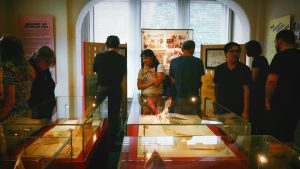
For it's latest exhibition, the Working Class Movement Library brought together a group of young, working class archivists to tackle the Big Flame archive. Drawing out parallels to the fights being fought today, the exhibition is not only a look back but a mediation on the future. Yeliz spoke to two of the young archivists about their journey.
By Yeliz Zaifoglu | 26.08.25
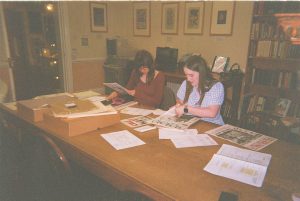
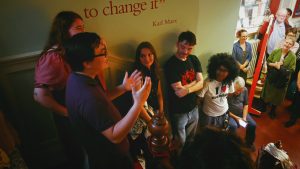
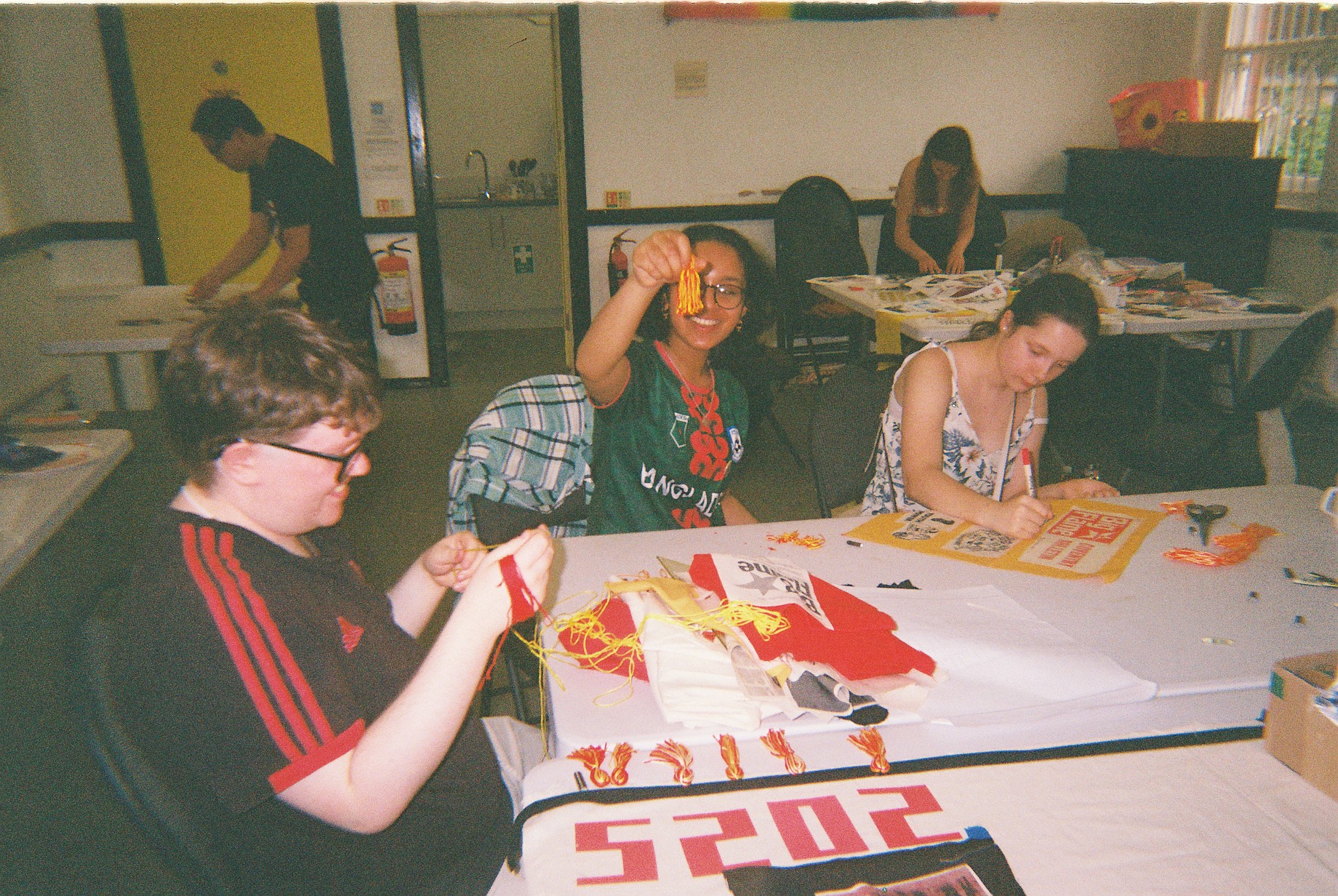
After a very sleepy morning train, my colleague Lisa and I arrived in a cold Salford and ran into the safety of the Working Class Movement Library! My first introduction to the library was through a workshop we did engaging with the loveliest group of young people. They were a part of a project to interact with the archive and create an exhibition dedicated to Big Flame and its revolutionary history. We spoke about all things archiving and how easy it is to start that process with a simple change of perspective and sometimes just a cardboard box. We made it very clear that championing archiving can really start with the self. It felt like that sentiment resonated with the group because we were met with nothing but warm stories of their upbringings and passionate conversations about what they've been learning when being exposed to the histories the library cares for. For this chat rather than sitting with an archivist, I sat with two of these ‘Little Flamers’ and caught their thoughts of what this project not only taught them but how it changed them.
For a bit of historic context, Big Flame was a revolutionary socialist and feminist organisation which grew out of Liverpool in 1970. They were influenced by the 1968 student movement and Italian activist network Lotta Continua, (trans. The Struggle Continues), whose base groups linked students and rank and file workers.
Throughout Big Flame’s existence, it attracted members and sympathisers from libertarian, anarchist and other left wing traditions from across the country who were organised into regional branches in London, Manchester and Sheffield amongst others. They attempted to bring together their commitment to de-centralisation, rank and file workplace and community organising with the emerging women’s liberation and other autonomous movements. The Working Class Movement Library holds one of the most significant collections of Big Flame material in the UK.
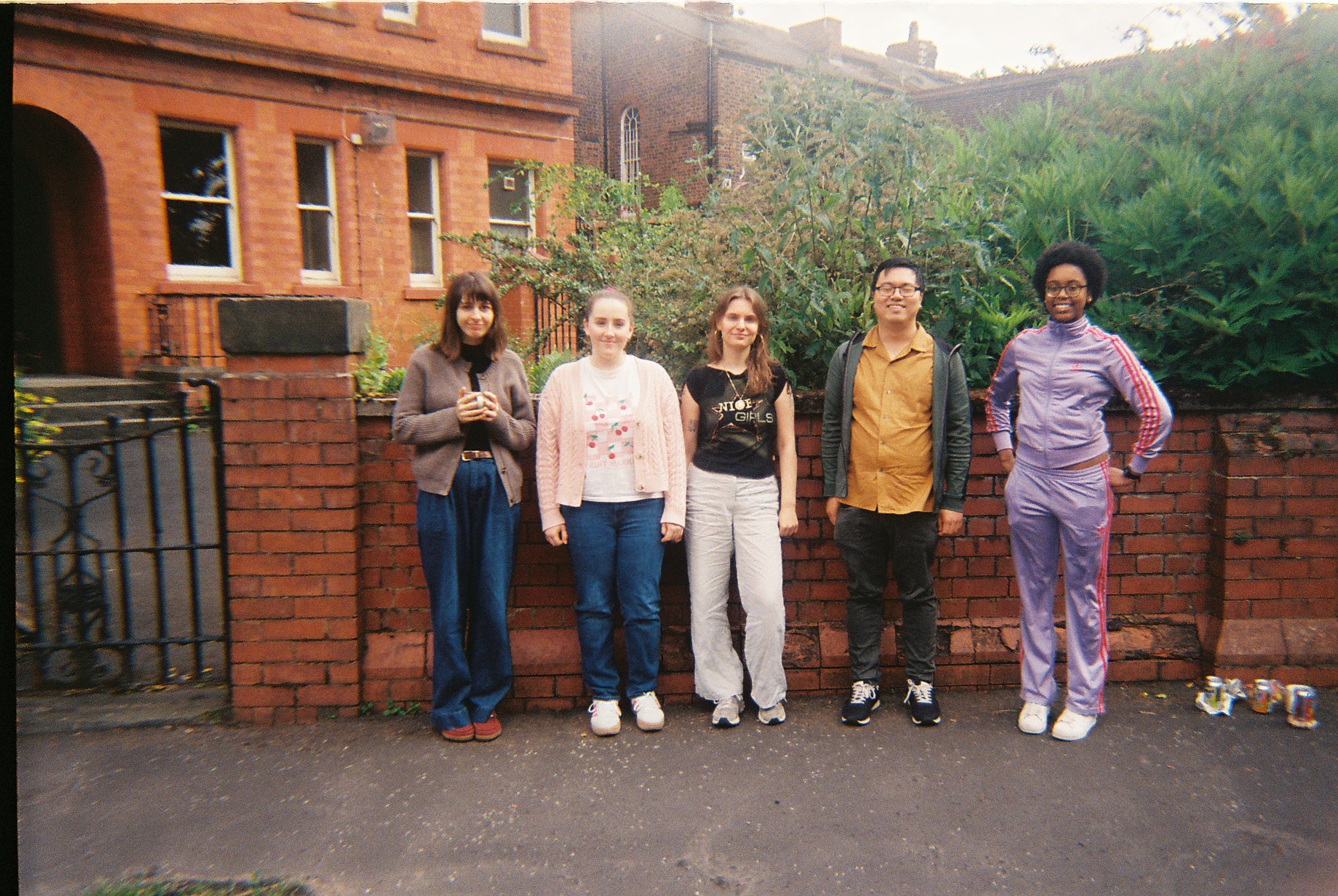
Shout out to Jack, Jason, Amie and the rest of the Little Flamers!
What sparked your initial interest in working with the Working Class Movement Library?
Jack Clarke: I think for me it was quite a big deal, because it's in Salford! But the thing is, I went to Salford University and I'd never even heard of the Movement Library. And I thought it was a genuine, great shame. When you walk inside, it's a very small and intimate building, but particularly if you're working class, you've never had access to a space before. It's just really, really interesting and engaging. So it was important for me to do something that was local, where I feel local history is being lost.
I guess its more connecting to where you know and the idea of wanting to preserve somewhere you know, because you know how easily it could be lost in a way?
Jack Clarke: Just to add a little bit onto that, because it’s where I’m from and my family’s from, what I see Salford as now is almost like two sides of the same coin. On one side, you’ve got Media City, which has sort of become like a mini middle class London. On the other, you’ve got young people doing balloons in alleyways and they’re not seeing the benefits of that development. Local history is preserved in places and people are interested in it, but slowly and surely it feels like it’s being lost, replaced by car parks, Lidls, and all that kind of jazz.
It's like a way of Salford almost regaining its autonomy back in a way! Do you agree, Jason, what's your opinion of the question? Like, what sparked you?
Jason Lee: What Jack said is really interesting. I think for me, I'm not a Salford resident, I'm from Huddersfield, which is also quite a working class town. I came here as a student and as someone that does history for their degree. It felt very natural in that way. Before this project, I'd never actually seen a non-sanitised version of our history being preserved, and for free! I think that's quite powerful.
My next question is when you were initially allowed to dig through the library, was there a specific collection that you're particularly fond of, and why?
Jason Lee: I think the collection on the Viraj Mendis defence campaign is really cool - would recommend people see that. The Viraj Mendis defence campaign was this uni student in the 80s who was born in Sri Lanka. He was a Tamil activist and he was at threat of deportation, and basically he was defended by the community. He claimed sanctuary in Hulme Ascension Church and the community were able to defend him for 760 days. A really astounding campaign and inspired many similar campaigns of defending migrants and asylum seekers, which I think is really impactful for you know, today's resistance against the far right.
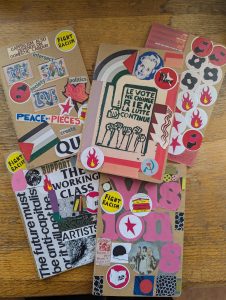
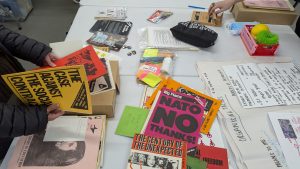
Jack Clarke: I think a big thing for us was when we were unpacking Big Flame and seeing just how relevant it is. It's almost like the same kind of issues, but a different kind of language to it. I think for me, it was actually really early on in the project, when I came in to do a bit of cataloging at the library. And it's quite personal, because I'm from a place in Salford called Kersal, and there was this really old plate. It was apparently the oldest artefact of that area, like the 1800s! An old emblem of a Salford lion, which used to represent Salford. So I was just really quite personally intrigued by that, because I think if you've got local histories like that, that obviously builds a regional identity, and then that can build national identity.
How do you think working with the library has changed your way of thinking about memory and capturing memory?
Jack Clarke: Well you’ve got people like our grandparents that have these personal objects that sit on their mantle places and those sorts of things, but I feel like in this day and age with everything going on, we don't see the value in everyday objects. Whereas, where we’ve been working with the Movement Library, I've learned a skill set of how to actually unpack an archive and put on an exhibition with display cases of those kinds of things. There's a real empowerment to that.
I'd really love to develop a resource that can be given out to people in working class communities, so they can self-curate their stuff, because they just don't want it to be lost. Or even if they can have a resource to help them donate their stuff to a place like the Movement Library. It's really important. This program was a great resource and it should continue to be, because this is a group of people that are thinking our own individual ways, are all going to go out in whatever it is that we do and carry something from this, and you can never map or chart the effects of that or even measure that. It's just something that happens, and that's why it needs to be there for me.
Jason Lee: I think because I have done stuff around histories before in my degree, this one was quite special in that it was a cooperative. There was also quite a lot of space for us to respond to what was in the archives. I don't think I've ever had that before in terms of being like, “hey, you know your response and how you like to connect with stuff in the archive that is like something worth preserving as well.” I think that's quite cool. It’s not really something I've encountered much before.
I think the fact that we were able to speak with people involved with Big Flame and being able to talk to them about their struggles in Manchester, that made it feel very connected and rooted. So it felt like quite a community history, even though what we're talking about is across the country. So having that outreach and engagement aspect of creating this exhibition, I think it was something that has really opened my eyes. It's really been a wonderful opportunity, because, frankly, it's a very rare one, but hopefully this is the start of more of this. And, yeah, I think in that way, the exhibition has already been a success because of how it's sort of taught that message to us as a team. Hopefully that can proliferate and go to where from, the viewers of the exhibition and even beyond.